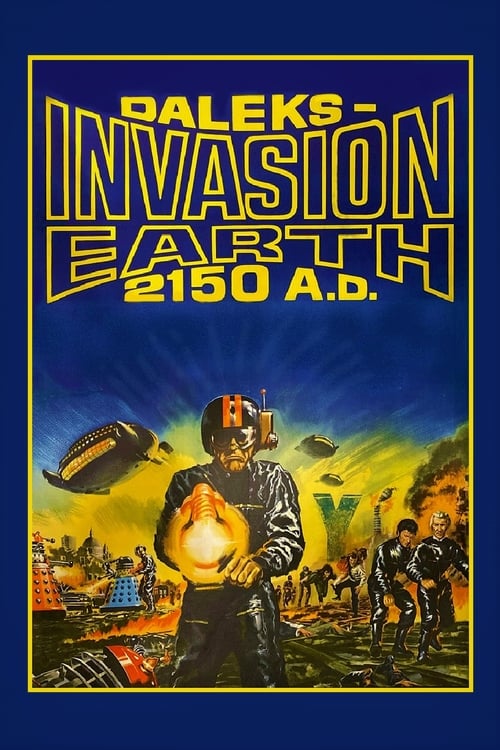
Daleks' Invasion Earth: 2150 A.D.
1966
No user ratings available yet
Representation score: 3.9 out of 10
Representation Score
Minimal
1965
NRDirector
Gordon Flemyng
Runtime
82 minutes
Average Rating
No ratings yetNew Showbiz Analysis
This 1965 science fiction film uses extraterrestrial conflicts to explore themes of survival and ethics. While it lacks modern multi-layered complexity, it employs alien species to offer a nuanced critique of totalitarianism and systemic oppression. The film's human cast is largely homogeneous, reflecting its historical context. Gender roles adhere to traditional 1960s norms, even when female characters exhibit intellectual leadership. The story's strength lies in its use of non-human species to explore complex social and ethical issues.
Category Breakdown
The film does not include any visible or implied LGBTQ+ characters. Relationships and family structures are portrayed in a traditional manner.
Barbara Wright demonstrates intellectual leadership as a teacher and friend. However, the story's progression is mainly driven by male characters, reinforcing traditional gender roles.
The human characters are predominantly of a single ethnicity. Non-human species like the Thals are used to explore themes of 'otherness' and societal survival outside human racial hierarchies.
The narrative criticizes militarism and expansionism by portraying the Daleks as a totalitarian force. It promotes pacifism through the Thals, highlighting the moral implications of institutionalized cruelty.
There are no characters with visible or invisible disabilities that serve as central plot devices or subjects of mockery.
Present on Screen
Limited or Absent
Official Synopsis
Scientist Doctor Who accidentally activates his new invention, the Tardis, a time machine disguised as a police telephone box. Who, his two granddaughters Barbara and Susan, and Barbara's boyfriend Ian are transported through time and space to the planet Skaro, where a peaceful race of Thals are under threat of nuclear attack from the planet's other inhabitants: the robotic mutant Daleks.
1966
1954
1969
1979
1964

1960
1965
1968
No reviews yet. Be the first to share your thoughts on this movie!
Use the rating form above to leave a star rating and optional review.