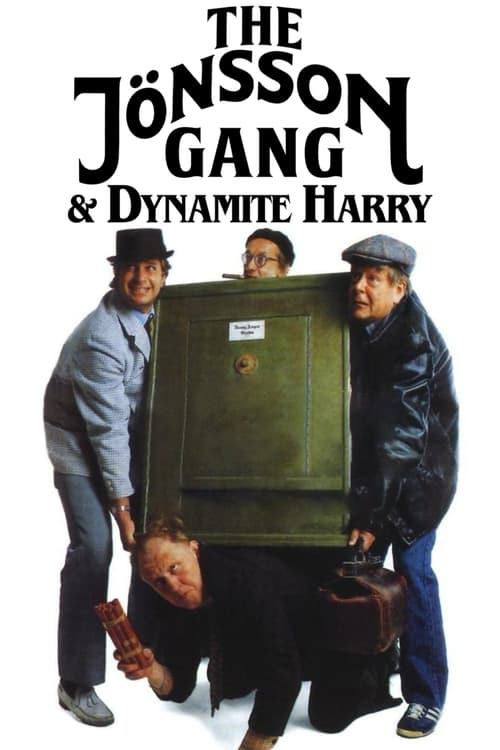
The Jönsson Gang & Dynamite Harry
1982
No user ratings available yet
Representation score: 2.5 out of 10
Representation Score
Limited
1989
Director
Mikael Ekman
Runtime
101 minutes
Average Rating
No ratings yetNew Showbiz Analysis
The film is a traditional heist comedy that relies on established genre clichés rather than social commentary. While it features characters operating on the fringes of legality, it lacks multi-layered complexity. The narrative structure follows the conventional social norms of the late 1980s, prioritizing ensemble-driven caper elements over the subversion of systemic hierarchies or diverse representation. Ultimately, the work functions as a classic genre piece, providing entertainment through the outlaw archetype without engaging in meaningful cultural or identity-based exploration.
Category Breakdown
The film does not include any LGBTQ+ characters or narratives. Romantic tension is confined to traditional heterosexual relationships, such as Harry and his fiancée, Doris.
Female characters like Doris and Germann play significant roles in the plot, yet they operate within a male-dominated ensemble. The film adheres to conventional 1980s gender roles.
Despite being set in Mallorca, the focus remains on the Swedish ensemble. The cast appears to reflect the homogeneous demographic norms of its production era.
The heist framework critiques institutional structures by showing thieves outsmarting the law. However, it functions primarily as entertainment rather than a deep social critique.
There is no mention of visible or invisible disabilities. No character arcs appear to be centered around disability.
Present on Screen
Limited or Absent
Official Synopsis
Vanheden and Dynamit-Harry, together with Harry's fiancée Doris, are in Mallorca while Sickan is still in Stockholm. However, Wall-Enberg talks him into doing a break-in at Las Palmas cathedral in Mallorca. Once persuaded, he can't resist the temptation and travels to Mallorca as well. However, Wall-Enberg obviously can't be trusted. Sickan is framed, caught and put in jail. While being escorted home to Sweden again, Vanheden and Harry sets up a plan to break him free. Sickan, once free, wants payback. The gang discover that an antiques dealer called Germann has something to do with the whole thing and that she's also collaborating with Wall-Enberg. The gang then decide to take a closer look at her and her antiques and they discover that there's a heist being planned against the cathedral in Palma.
1982

1958
1984

1964
1981
2003
1977

1972
No reviews yet. Be the first to share your thoughts on this movie!
Use the rating form above to leave a star rating and optional review.