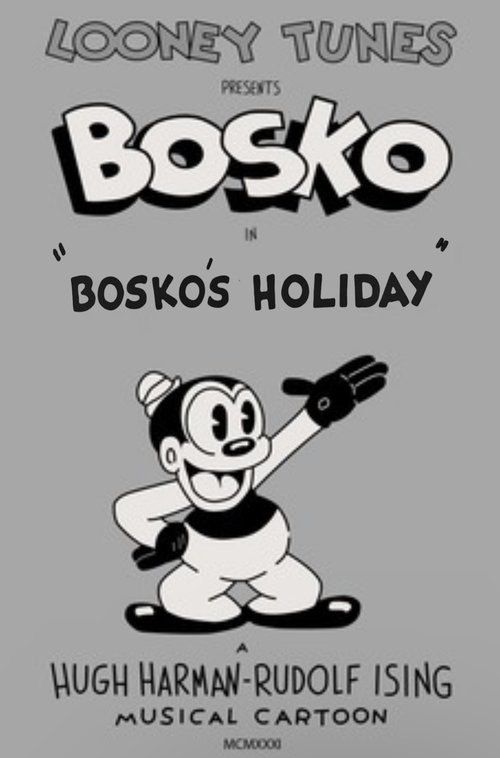
Bosko's Holiday
1931
No user ratings available yet
Diversity score: 3.1 out of 10

1933
GDirector
Rudolf Ising, Hugh Harman
Runtime
7 minutes
Average Rating
No ratings yetSynopsis
Christmas Eve. A poor orphan boy trudges through the snow, pathetically. He finally arrives at his miserable cabin. While he is crying, Santa arrives and, singing the title song, offers to take the boy to his workshop. They arrive, and the toys go wild. He plays with a few toys. A candle falls off the tree and starts a fire. The toys try in vain to fight the fire; the boy hooks up a hose to a set of bagpipes and takes care of it.
Overall Score
Minimal
Category Breakdown
LGBTQ+ Representation
The film operates within a conventional heteronormative framework. There is no evidence of queer subtext or non-cisnormative identities present.
Gender Representation
The cast is almost entirely male, centered on a boy and Santa Claus. The narrative lacks female agency, reinforcing a male-centric vacuum.
Racial & Ethnic Diversity
Characters exist within a homogeneous, Westernized mythos. The setting adheres to a standard Eurocentric Christmas aesthetic without racial blending.
Religious & Cultural Diversity
The story celebrates traditional Western holiday values and folklore. It reinforces the concept of the benevolent provider through the Santa Claus mythos.
Disability Representation
The protagonist's vulnerability appears to be a socioeconomic depiction of an orphan. There is no nuanced portrayal of physical or neurodivergent disability.
Strengths
Areas for Improvement
AI Analysis
This 1933 animated short functions as a traditional, celebratory piece that reinforces established Western cultural norms. It relies on classic tropes of pathos and seasonal folklore to drive its narrative. The film lacks the narrative architecture to challenge systemic hierarchies. Its focus remains on a singular, male-centric journey that avoids intersectional representation or diverse perspectives. Ultimately, the work is a product of its era, prioritizing commercial storytelling and traditional holiday archetypes over social complexity.
No reviews yet. Be the first to share your thoughts on this movie!
Use the rating form above to leave a star rating and optional review.