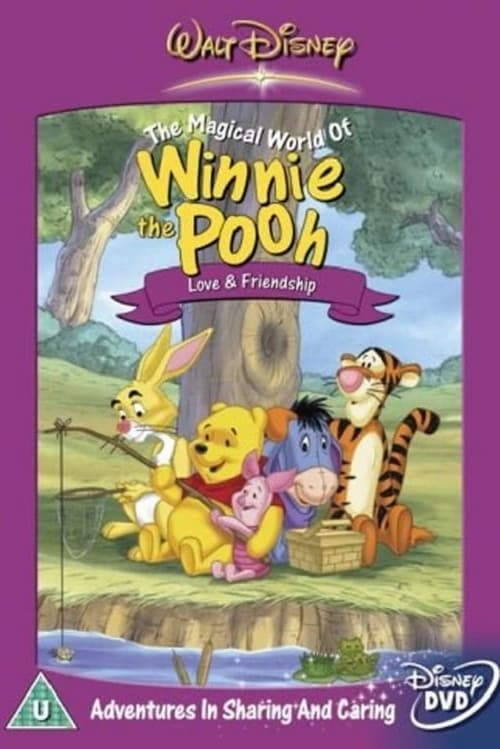
The Magical World of Winnie the Pooh: Love and Friendship
2003
No user ratings available yet
Representation score: 1.6 out of 10
Representation Score
Limited
2003
Director
Terence Harrison, Karl Geurs, Charles August Nichols
Runtime
70 minutes
Average Rating
No ratings yetNew Showbiz Analysis
The film serves as a traditional, safe episode of the Winnie the Pooh series. It emphasizes stable, character-driven stories and moral lessons over social commentary or identity exploration. Since the characters are animals, the narrative avoids issues related to race, ethnicity, and gender identity, creating a homogeneous environment without intentional diversity or cultural critique. The work sticks to predictable storytelling and prosocial values, lacking diversity in most social categories.
Category Breakdown
The film focuses on friendships and family bonds without any non-straight or non-cisgender identities. There is no hint of same-sex romantic feelings.
Gender roles follow traditional stereotypes, such as Kanga’s nurturing mother role. Male characters dominate the main actions through various personalities.
The story takes place among animal characters in a rural setting. It avoids discussing race or ethnicity by focusing on a non-human world.
The film promotes conventional Western values like responsibility and sharing. It emphasizes community and following established routines.
Characters like Tigger’s hyperactivity and Piglet’s anxiety are presented as personality traits rather than disabilities. The film does not offer nuanced representations of actual disabilities.
Present on Screen
Limited or Absent
Official Synopsis
Join all your pals from the Hundred Acre Wood as they laugh, play and learn important lessons in four enchanting adventures. What do you give a Tiger who has nothing and wants everything? Turns out, it's the thought that counts in All's Well That Ends Well. Then, Christopher Robin learns about responsibility when Kanga puts him in charge of Roo in Babysitter Blues. Next, Rabbit's unbending schedule threatens to turn him into the ultimate Party Poohper, and Tigger's wild imagination puts a little too much bounce into Piglet's Pooberry!
2003
2002
1999

1977
2008

1997
2003
2000
No reviews yet. Be the first to share your thoughts on this movie!
Use the rating form above to leave a star rating and optional review.