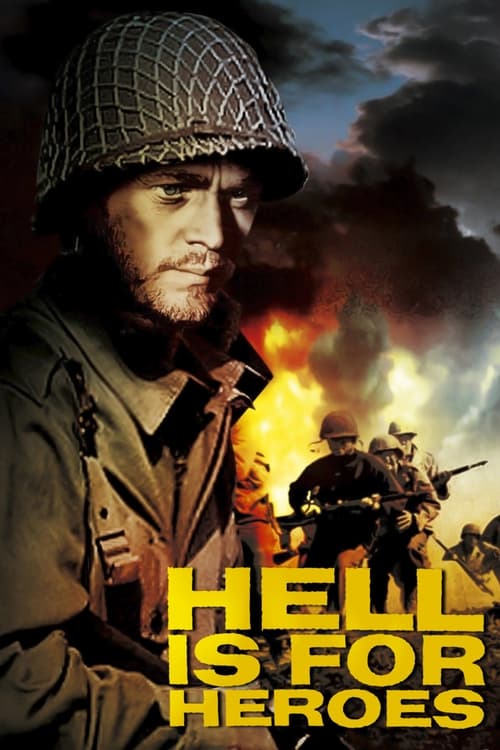
Hell Is for Heroes
1962
No user ratings available yet
Representation score: 0.8 out of 10

Representation Score
Minimal
1958
NRDirector
Burt Topper
Runtime
64 minutes
Average Rating
No ratings yetNew Showbiz Analysis
Hell Squad is a traditionalist genre piece that adheres strictly to the social hierarchies of 1950s war cinema. The narrative is built around a homogeneous group of male soldiers, offering no room for diverse identities or perspectives that reflect multiple aspects of identity. The film functions as a standard combat story, focusing on the survival of a small American squad in North Africa. It lacks the intentionality required to disrupt conventional social structures or provide meaningful representation for underrepresented groups. Ultimately, the film serves as a snapshot of mid-century patriotic storytelling, prioritizing a narrow, conventional view of wartime conflict over social complexity.
Category Breakdown
The film focuses on a standard wartime conflict between American and German units. There is no indication of LGBTQ+ identities or non-binary gender roles.
The narrative centers entirely on a male military squad. It lacks female characters with significant roles, reinforcing traditional masculine leadership and gender-segregated combat environments.
Set in Tunisia, the film depicts a squad of American soldiers. Given the time period and genre, the cast likely lacks racial and ethnic diversity.
The story follows traditional mid-century Western war narratives. It adheres to conventional wartime morality and patriotic storytelling without challenging geopolitical norms.
The film does not feature characters with visible or invisible disabilities. There is no information about representation in this category.
Present on Screen
Limited or Absent
Official Synopsis
During World War II, a squad of five American soldiers become lost in Tunisia and are killed one by one in fights with German units. Finally only one man, Private Russo, is left, in the midst of a mine field, together with a German officer, locked in a stalemate. Russo has water, while the German claims to have a map revealing the mine positions. So Russo agrees to swap water for the map, but the German officer tries to double-cross him. This was Burt Topper's debut film, made on 16mm on weekends together with some friends in Indio, California. It was also Wally Campo's debut film, as well as script supervisor Joyce King's.
1962
1943
1969
1941
1968
1978
1965
1949
No reviews yet. Be the first to share your thoughts on this movie!
Use the rating form above to leave a star rating and optional review.