
May 15th
1969
No user ratings available yet
Representation score: 4.4 out of 10
Representation Score
Fair
1990
PG-13Director
Jonathan Heap
Runtime
25 minutes
Average Rating
No ratings yetNew Showbiz Analysis
12:01 PM is a technically proficient science fiction short that prioritizes narrative coherence and existential inquiry over social commentary. The film relies heavily on the 'everyman' cliché, which centers a singular, traditional masculine perspective within a closed temporal loop. While the time-loop mechanic offers a deconstruction of linear progression, the film lacks multi-layered complexity. The narrative structure adheres to the individualist struggles typical of early 1990s genre cinema, offering little subversion of established social hierarchies. Ultimately, the film functions as a focused character study of a man against metaphysical forces, but it does not intentionally engage with diverse identities or systemic critiques.
Category Breakdown
The story revolves around a single protagonist caught in a time loop. There are no LGBTQ+ characters or representations of non-straight relationships.
The film centers on a traditional masculine 'everyman' character. It lacks strong female characters or those who challenge gender hierarchies.
The story features a singular protagonist in a speculative setting. The cast is not diverse and follows a predominantly Anglo-Saxon profile.
The science fiction premise explores existential themes through a time loop. It does not explicitly critique religion, family, or patriotism.
The protagonist's confusion can be interpreted through a neurodivergent lens, but this is a metaphorical device rather than a depiction of lived disability.
Present on Screen
Limited or Absent
Official Synopsis
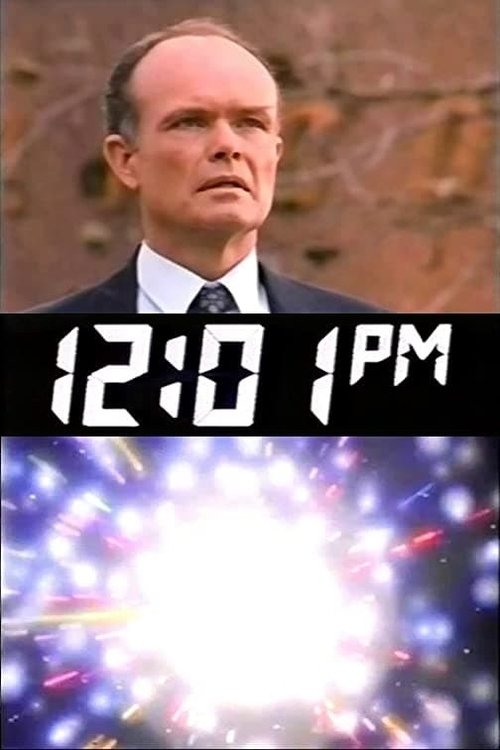
12:01 PM is a 1990 short film directed by Jonathan Heap and starring Kurtwood Smith. It follows Myron Castleman, an everyman who keeps repeating the same hour of his life, from 12:01 PM to 1:00 PM.
1969

1968

2015
1993
2020

2018

1998

2023
No reviews yet. Be the first to share your thoughts on this movie!
Use the rating form above to leave a star rating and optional review.