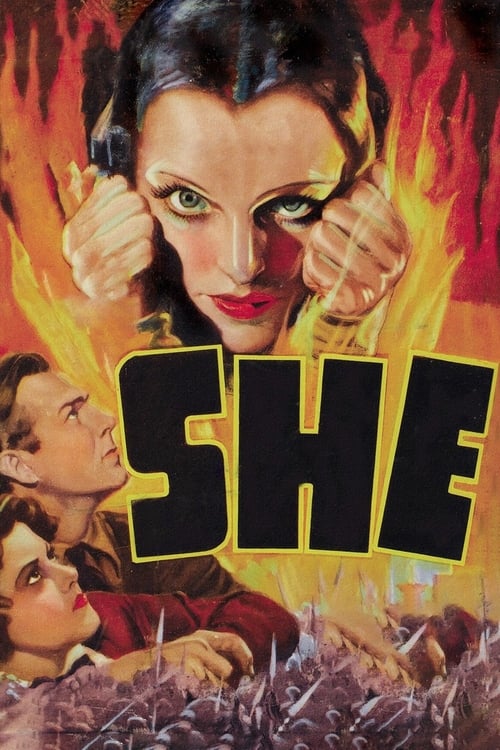
She
1935
No user ratings available yet
Representation score: 1.4 out of 10

Representation Score
Limited
1965
NRDirector
Robert Day
Runtime
106 minutes
Average Rating
No ratings yetNew Showbiz Analysis
The film presents a complex interplay of progressive and regressive elements. On one hand, Ayesha’s absolute authority offers a powerful subversion of traditional gender roles, placing a woman at the top of political power. However, the narrative remains rooted in mid-century colonialist frameworks. The story is told through the lens of British explorers, reinforcing Eurocentric perspectives. Furthermore, the film lacks depth in addressing multiple aspects of diversity. While it challenges traditional masculine dominance, it does not go beyond the white, straight-centered, and colonialist structures typical of 1960s adventure cinema.
Category Breakdown
The film does not depict any non-straight relationships or same-sex intimacy. Romantic tension is focused solely on the reincarnation of a past lover.
Ayesha breaks traditional gender hierarchies by serving as a sovereign ruler with absolute supernatural authority. She holds a position of dominance over her male counterparts, challenging the standard male leadership.
The narrative centers around a white, Anglo-Saxon protagonist despite being set in an ancient African kingdom. The story is told from the perspective of British explorers.
The film uses Western romanticism to explore quasi-divine mythology. It reinforces the era's fascination with the exotic without critiquing Western institutions.
There are no depictions of physical or neurodivergent disabilities. Characters with disabilities are not used as narrative devices.
Present on Screen
Limited or Absent
Official Synopsis
The lost city of Kuma is ruled by the cruel, arrogant, beautiful queen, Ayesha, gifted with eternal life. She lures Leo Vincey into her world, seeing in him the reincarnation of the lover she long ago murdered in a fit of violent jealousy. Against all advice Leo is determined to stay and Ayesha persuades him to bathe in the flame of eternal youth... with disastrous consequences.
1935
1950
1952
1951
1961
1932

1968
1954
No reviews yet. Be the first to share your thoughts on this movie!
Use the rating form above to leave a star rating and optional review.