Duncan or Devonald with Muslin Cloud
1891
No user ratings available yet
Representation score: 0.0 out of 10
No Poster Available
Representation Score
Minimal
1891
Director
William Heise, William K.L. Dickson
Runtime
1 minutes
Average Rating
No ratings yetNew Showbiz Analysis
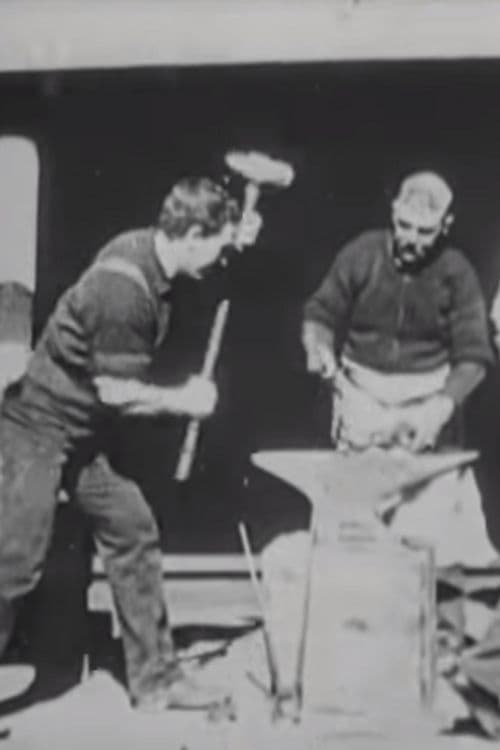
The camera fixes on a blacksmith’s shop in 1891, capturing the rhythmic strike of a hammer against metal. This is not a story but a record: a static, unedited observation of manual labor in its pre-industrial form. The film’s argument is purely functional. It sells the image of the self-reliant artisan, where worth is demonstrated not through dialogue or drama, but through the visible competence of shaping iron. The white, male workers are the unmarked default of the era, their presence treated as a neutral fact rather than a social statement. The sold meaning is the dignity of the trade itself. The camera loves the hands and the tools, treating the body as a mechanism for work rather than a vessel for identity. There is no satire, no punchline, and no moral verdict; the cycle of labor is closed and self-contained. The ending is simply the continuation of the work, rewarding the viewer with the continuity of the craft. It is a historical artifact that prints the legend of the independent worker, where merit is the only currency and the physical result is the only proof. The film does not judge the hierarchy of the shop; it simply documents it, leaving the viewer with a silent, repetitive, and unbroken image of American labor in its infancy.
Category Breakdown
No romantic or sexual identity appears in the frame. The film is a technical record of labor, devoid of interpersonal intimacy or implied connection between the men at work.
The shop is exclusively male, with women entirely absent from the frame. Masculinity is expressed solely through physical competence and tool use, lacking any gender interaction or dynamic to evaluate.
All visible workers are white men, reflecting the unmarked historical default of 1891 American labor. No racial diversity is present, nor is race a thematic concern in this technical demonstration.
The film documents pre-industrial craft as a neutral, dignified act. Class is visible through working-class attire, but the narrative treats manual labor as a factual subject rather than a moral or political statement.
The blacksmith’s body is presented as a healthy, functional tool. No disability, impairment, or medical condition is depicted or referenced in the static observation of the trade.
Present on Screen
Limited or Absent
Official Synopsis
Lost film from 1891, directed by William K.L. Dickson and William Heise. The film stars James C. Duncan.
1891

1891
1891
1892
1896
1892
1895

1894
No reviews yet. Be the first to share your thoughts on this movie!
Use the rating form above to leave a star rating and optional review.