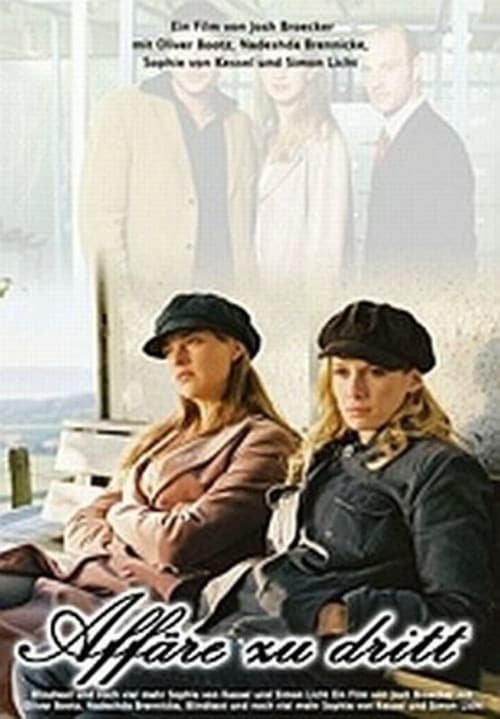
Affäre zu dritt
2003
No user ratings available yet
Representation score: 5.0 out of 10

Representation Score
Good
2011
Director
Dominik Graf
Runtime
89 minutes
Average Rating
No ratings yetNew Showbiz Analysis
Dominik Graf’s drama succeeds as a character study that subverts traditional gender hierarchies. By placing female psychological maneuvers at the center of the plot, the film elevates its protagonists beyond mere supporting roles. However, the film lacks breadth in other areas. The cast is predominantly homogeneous, offering little racial or ethnic diversity. Furthermore, while psychological themes are present, they lean toward plot devices rather than nuanced representations of neurodivergence. Ultimately, the work is a sophisticated exploration of female relationality and social instability, even if it remains limited in its broader demographic visibility.
Category Breakdown
The film explores intense, unresolved connections between women through Jo and Vera's shared history. It disrupts conventional friendship clichés by focusing on their complex relationship rather than their sexual orientation.
The narrative centers on female psychological ability to act and interpersonal conflict. Jo and Vera act as the primary drivers of the plot, avoiding the cliché of women as passive supporting characters.
The film appears to be a localized German drama with a predominantly homogeneous cast. There is no evidence of significant racial blending or non-white characters driving the narrative.
The story deconstructs the stability of the nuclear family unit through Vera and Bruno’s domestic setting. It prioritizes subjective internal truths over a singular, traditional moral framework.
Themes of psychological instability and obsession serve as central narrative drivers. However, these elements function more as tools for suspense than a dedicated exploration of mental health issues.
Present on Screen
Limited or Absent
Official Synopsis
The police psychologist Jo is supposed to help catch the sex offender Molesch. Since the hotel is fully booked, she stays with her old college friend Vera and her husband Bruno. It turns out that Vera and Jo used to be in love with the same man. The two women's musings are interrupted when Molesch suddenly appears in the garden.
2003

2007

1981
1989
2012

2006
1998

2019
No reviews yet. Be the first to share your thoughts on this movie!
Use the rating form above to leave a star rating and optional review.