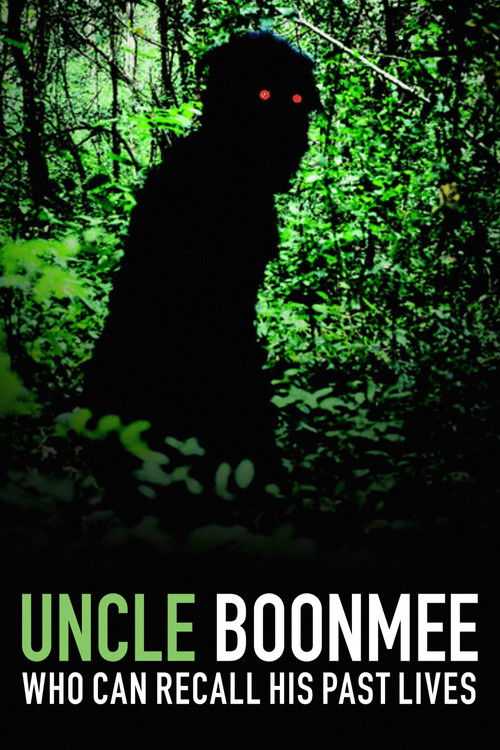
Uncle Boonmee Who Can Recall His Past Lives
2010
No user ratings available yet
Representation score: 8.2 out of 10

Representation Score
Excellent
2015
UnratedDirector
Apichatpong Weerasethakul
Runtime
122 minutes
Average Rating
No ratings yetNew Showbiz Analysis
Apichatpong Weerasethakul’s work disrupts Western thinking through a non-linear, postmodern structure. It excels in its authentic Southeast Asian cultural and spiritual settings, presenting them as sophisticated realities alongside modern medicine. However, the film avoids traditional gender hierarchies and straight-centered clichés but lacks specific representation of LGBTQ+ identities and treats the central medical condition as a metaphysical concept rather than a lived disability.
Category Breakdown
The film focuses on spiritual connections rather than explicit LGBTQ+ identities. It avoids traditional heterosexual assumptions through telepathic bonds, but does not include specific LGBTQ+ characters.
A female nurse is the main character and mediator between clinical and supernatural elements. Her role is defined by empathy and spiritual insight rather than traditional feminine roles.
The film is set in Southeast Asia with a Thai cast. It presents a non-Western perspective as a central reality rather than an exoticized element.
The story explores spiritual beliefs, blending modern medicine with ancient reincarnation concepts. It questions modern institutions' understanding of spiritual complexities.
A mysterious sleeping sickness drives the plot, treated as a metaphysical phenomenon. The condition is explored as altered consciousness rather than a physical disability.
Present on Screen
Limited or Absent
Official Synopsis
In a hospital, ten soldiers are being treated for a mysterious sleeping sickness. In a story in which dreams can be experienced by others, and in which goddesses can sit casually with mortals, a nurse learns the reason why the patients will never be cured, and forms a telepathic bond with one of them.
2010
1973
2013
2021

2017

2016

2014

2006
No reviews yet. Be the first to share your thoughts on this movie!
Use the rating form above to leave a star rating and optional review.