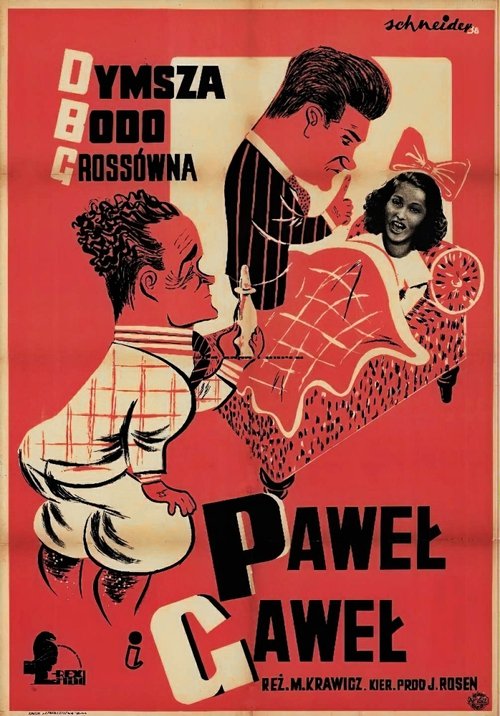
Paweł & Gaweł
1938
No user ratings available yet
Diversity score: 3.2 out of 10

1936
NRDirector
Rowland V. Lee
Runtime
80 minutes
Average Rating
No ratings yetSynopsis
Suave French actor Philippe Martin provokes a scandal when, in a darkened theater, he mistakes young Monique for his mistress, Yvonne, and tries to kiss her. Charged with assault, the quick-thinking Philippe claims it's French tradition to do as he did, and is let go. To his surprise, Philippe learns that Monique has paid his fine. As the tabloids exploit the situation, Monique dates Philippe, until a photo appears of him kissing Yvonne.
Overall Score
Limited
Category Breakdown
LGBTQ+ Representation
The film focuses on heterosexual romantic entanglements and mistaken identity. There is no evidence of queer subtext or non-cisnormative gender identities within the plot.
Gender Representation
The narrative centers on a male protagonist whose actions drive the conflict. While Monique shows agency by paying a fine, the plot follows traditional hierarchies where male error catalyzes the comedy.
Racial & Ethnic Diversity
The story utilizes a Eurocentric framework centered on a French actor. It lacks evidence of a diverse cast or a blending of racial identities beyond Western European social structures.
Religious & Cultural Diversity
French tradition is used as a narrative device to excuse social misconduct. The film adheres to conventional 1930s comedic structures rather than challenging Western institutions.
Disability Representation
There are no visible or invisible disabilities depicted as central to the character arcs in this story.
Strengths
Areas for Improvement
AI Analysis
One Rainy Afternoon is a conventional 1930s comedy that relies heavily on established social hierarchies and romantic tropes. The plot is driven by the actions of a male lead, Philippe, whose social scandals dictate the narrative momentum. The film reinforces a Eurocentric worldview, using French cultural identity as a lighthearted plot device rather than a means of deep cultural exploration. It functions within the standard studio filmmaking conventions of its era. Ultimately, the work lacks the intentionality to disrupt traditional gender or racial archetypes, serving instead as a period piece that mirrors the social norms of its time.
1938
1957
1928
1914
2002
1939
1936
1946
1984
1942
1932
1935
No reviews yet. Be the first to share your thoughts on this movie!
Use the rating form above to leave a star rating and optional review.