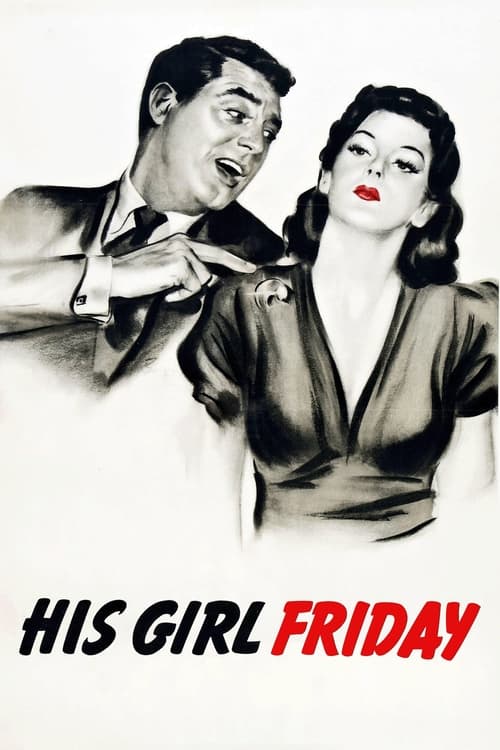
His Girl Friday
1940
No user ratings available yet
Representation score: 3.0 out of 10

Representation Score
Limited
1994
PGDirector
Charles Shyer
Runtime
123 minutes
Average Rating
No ratings yetNew Showbiz Analysis
I Love Trouble functions as a character study of socioeconomic friction. It utilizes the 'odd couple' cliché to explore the divide between high-society privilege and working-class pragmatism. While the film lacks diversity in race and sexuality, it succeeds in providing meaningful ability to act to its female protagonists. The narrative momentum relies on their competence rather than male intervention. Ultimately, the film's diversity is concentrated in its gender dynamics and its irreverent look at class hierarchies, even as it remains demographically narrow.
Category Breakdown
The film does not include any LGBTQ+ characters or stories. The main focus is on a strong female friendship rather than queer identities.
Female leads drive the investigative plot who play a significant role in driving the story. By centering the mystery on a socialite and a working-class woman, the film avoids traditional damsel clichés.
The cast and setting are predominantly homogeneous. The narrative lacks intentional racial blending, focusing instead on a uniform social environment.
The story uses class friction to critique high-society frivolity. It frames amateur sleuthing as a way to bypass institutional structures and traditional authority.
There are no prominent depictions of visible or invisible disabilities. No characters utilize disability as a central arc or plot device.
Present on Screen
Limited or Absent
Official Synopsis
Rival Chicago reporters Sabrina Peterson and Peter Brackett join forces to uncover a train wreck conspiracy.
1940
1936

2001

1942

1987
1942

1999
1934
No reviews yet. Be the first to share your thoughts on this movie!
Use the rating form above to leave a star rating and optional review.