
Damiana and the Men
1967
No user ratings available yet
Representation score: 4.0 out of 10
Representation Score
Limited
1964
Director
José Bénazéraf
Runtime
92 minutes
Average Rating
No ratings yetNew Showbiz Analysis
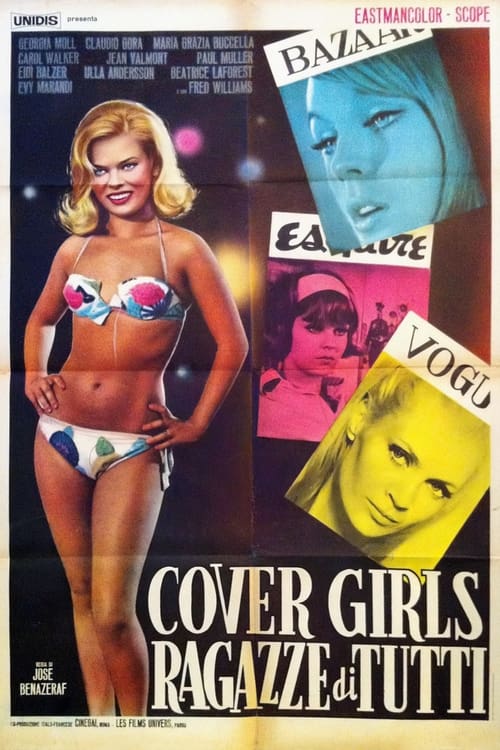
Cover Girls is a product of 1960s French erotic cinema that explores sexual liberation and the breakdown of traditional modesty. While it centers female desire, it remains tied to the era's conventional hierarchies. The film's primary limitation lies in its lack of diverse perspectives. It relies on a homogeneous European aesthetic and a narrow focus on straight relationships without queer representation. Ultimately, while the film challenges social norms, it functions largely through a voyeuristic lens that commodifies its female subjects.
Category Breakdown
The film follows a traditional framework that assumes everyone is straight and cisgender. There are no non-cisgender gender identities or same-sex romantic relationships in the story.
Women play a central role in driving the film's visual energy and sexual dynamics. However, the narrative often presents them as objects of visual consumption through a male perspective.
The cast predominantly features a homogeneous European appearance. There is no evidence of significant racial diversity or non-white characters in key roles.
The story prioritizes sexual liberation over traditional religious norms. It challenges conservative modesty but operates within a consumerist framework focused on fashion and celebrity.
There is no evidence of characters with physical or neurodivergent disabilities in the narrative or casting.
Present on Screen
Limited or Absent
Official Synopsis
Photographer Philippe Abregas teams up with a Swedish model he met in Roman high society and tells her the story of the four other girls he has chosen to feature on the cover of his magazine.
1967
1975
1972
1956

1960
1965
1972
1963
No reviews yet. Be the first to share your thoughts on this movie!
Use the rating form above to leave a star rating and optional review.