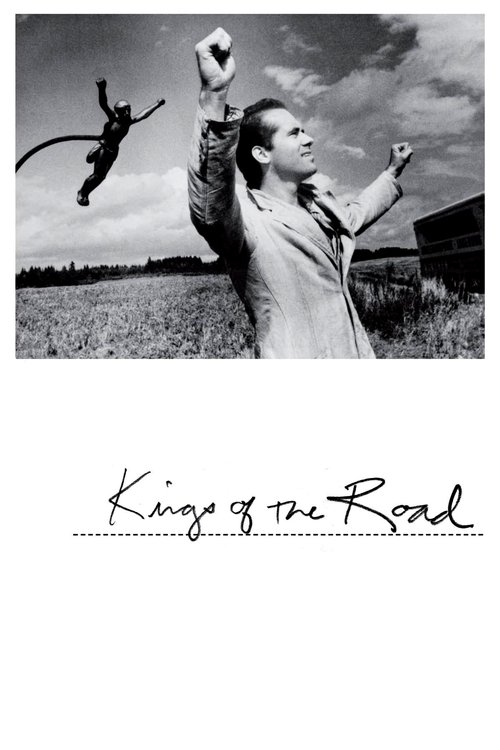
Kings of the Road
1976
No user ratings available yet
Diversity score: 3.6 out of 10

1993
Director
Wim Wenders
Runtime
31 minutes
Average Rating
No ratings yetSynopsis
“The bear leaves Berlin. It is fed up with its city. On the way two Russian ladies, Anna and her daughter Arisha, hire him as a driver. They are joined by a Santa Claus who despises Christmas and a Vietnamese family who are on their way to the sea. They sing a song together, The Weeping Song by Nick Cave. And they are out to find a stone ring that is buried on the beach. The film was commissioned by a Japanese car museum. There you could see the film with six smells (!), sitting on car seats that would tilt in corners and shake on cobble stone pavement. This small film saved a big one’s life: FARAWAY, SO CLOSE! could not have been finished for financial reasons if this opportunity to make a short film with the same team had not arisen. That is how we financed the last week of shooting FARAWAY, SO CLOSE!.”
Overall Score
Good
Category Breakdown
LGBTQ+ Representation
The narrative focuses on a transient group of travelers without explicit depictions of non-heteronormative identities. There is no evidence of active LGBTQ+ representation within the provided story details.
Gender Representation
Anna and Arisha serve as the primary catalysts for the journey, driving the plot forward. This female-led dynamic offers a moderate subversion of traditional patriarchal travel tropes.
Racial & Ethnic Diversity
The film features a multicultural ensemble, including Russian expatriates and a Vietnamese family. This intersectional casting disrupts the idea of a homogeneous Western journey.
Religious & Cultural Diversity
The film critiques Western norms through a disillusioned Santa Claus character. The group's search for a mythical stone ring suggests a communal, non-institutional form of spirituality.
Disability Representation
There are no visible or mentioned depictions of physical or neurodivergent disabilities in the film's description.
Strengths
Areas for Improvement
AI Analysis
Wim Wenders crafts a multi-ethnic tapestry that prioritizes a collective, borderless experience. The film succeeds by assembling a diverse group of travelers—ranging from Russian expatriates to a Vietnamese family—who navigate a European landscape together. While the work lacks explicit LGBTQ+ or disability-centric arcs, it excels in its deconstruction of cultural symbols. By subverting archetypes like Santa Claus, the film moves away from traditional Western celebratory norms toward a more subjective, secular morality. Ultimately, the strength of the film lies in its refusal of nationalistic or individualistic pursuits. It replaces them with a progressive, nomadic journey centered on shared human connection and ethnic plurality.
1976
1974

2008

1977
2010

2000

2012
2019

1975

2013

2019

2011
No reviews yet. Be the first to share your thoughts on this movie!
Use the rating form above to leave a star rating and optional review.