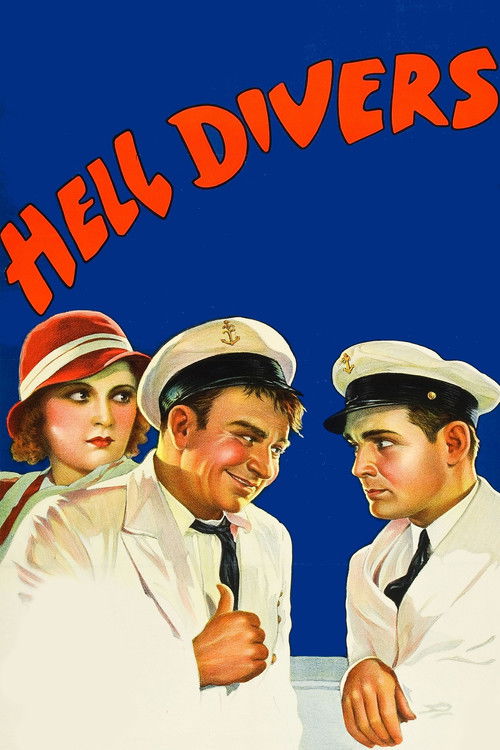
Hell Divers
1932
No user ratings available yet
Representation score: 1.8 out of 10

Representation Score
Minimal
1938
ApprovedDirector
James Cruze
Runtime
65 minutes
Average Rating
No ratings yetNew Showbiz Analysis
Come On, Leathernecks! is a product of the 1938 studio system, prioritizing traditional heroism and institutional loyalty. The plot revolves around a father's desire for his son to join the Marines, a premise that centers on masculine lineage and patriarchal duty. The film reinforces conventional social hierarchies rather than challenging them. It adheres to the era's standard narrative structures, focusing on the preservation of family patterns and Western institutional values. Consequently, the film lacks diversity in gender, race, and identity, reflecting the homogeneous casting and social codes prevalent in mainstream Hollywood during this period.
Category Breakdown
The film focuses on traditional romantic and familial structures. There is no evidence of non-straight or non-cisgender identities or critiques of the assumption that everyone is straight or cisgender.
The story centers on masculine archetypes and patriarchal expectations. While romance is a genre element, the narrative is driven by men navigating military duty.
The film likely reflects the era's lack of racial integration in Hollywood. It appears to conform to the homogeneous casting standards of the late 1930s.
The narrative reinforces patriotism and respect for established authority. It emphasizes honoring institutional traditions like the Marine Corps and family legacy.
There is no indication that disability or neurodivergence plays a role in the narrative.
Present on Screen
Limited or Absent
Official Synopsis
The father of a star football player at Annapolis wants his son to follow the family pattern and join the Marines.
1932
2008
1929
1941
1943
1940
1938
1940
No reviews yet. Be the first to share your thoughts on this movie!
Use the rating form above to leave a star rating and optional review.