Honey for Oshun
2003
No user ratings available yet
Representation score: 9.1 out of 10
Representation Score
Fair
1999
TV-MADirector
Fernando Colomo
Runtime
113 minutes
Average Rating
No ratings yetNew Showbiz Analysis
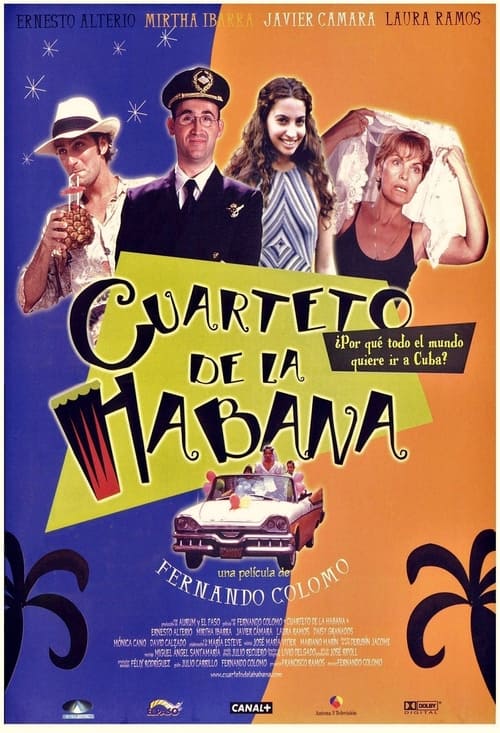
Havana Quartet is a character-driven comedy that emphasizes transnational connections over rigid social hierarchies. The film stands out by focusing on women's ability to drive the story and the complexities of a cross-continental family bond rather than a traditional male-led journey. While the film successfully integrates cultural and ethnic diversity by bridging Spain and Cuba, it remains limited in its exploration of identity. The absence of LGBTQ+ representation and visible disability representation confines the diversity profile to heritage and gendered roles rather than broader social spectrums. Overall, the film provides a nuanced view of how identity is shaped by unexpected familial ties and geographical displacement, offering a more globalized perspective compared to standard Eurocentric comedies.
Category Breakdown
The film does not depict any LGBTQ+ identities or relationships that go beyond traditional heterosexual norms. The story focuses on biological connections and typical family structures.
Women play key roles in driving the plot, particularly the mother’s decision to reclaim her son, which shifts the focus away from the male protagonist and onto the women.
The story integrates Spanish and Cuban identities through a journey across continents. This blend of diverse ethnic backgrounds broadens the narrative beyond a Eurocentric viewpoint.
By moving the setting from Madrid to Havana, the film explores transnational identity and displacement. It uses a non-Western landscape to challenge localized social norms.
There is no evidence of characters with visible or invisible disabilities in the narrative. No specific representation is present in the provided details.
Present on Screen
Limited or Absent
Official Synopsis
Walter, an aspiring musician from Madrid, has a lot of troubles. After finding a videotape, he learns something which will alter his whole life, and put his Madrid problems on hold. In the tape, a Cuban woman confesses to being his mother. She is waiting for him in Havana. Walter goes to Havana to see his mother. There, the plot thickens with the addition of the mother's daughter, and a Spanish airline crew member, who round out the quartet.
2003
1974

2006
2014

2019
1994
1998

2014
No reviews yet. Be the first to share your thoughts on this movie!
Use the rating form above to leave a star rating and optional review.