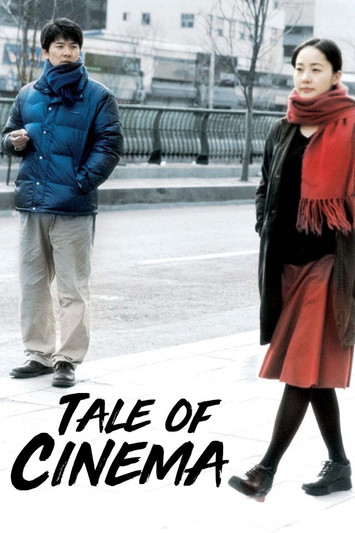
Tale of Cinema
2005
No user ratings available yet
Representation score: 5.1 out of 10
Representation Score
Fair
2002
13Director
Jeon Soo-il
Runtime
106 minutes
Average Rating
No ratings yetNew Showbiz Analysis
The film serves as a contemplative exploration of identity and the breakdown of reality. It shifts away from conventional hierarchies of duty versus desire, presenting the protagonist's detachment as a fundamental part of his identity. Though the film doesn't feature multi-layered activism or diverse casting, it excels in subverting domestic stability. It prioritizes psychological complexity and the disruption of narrative coherence over straightforward dramatic resolutions. Ultimately, the work delves into the tension between personal desires and societal expectations, providing a nuanced view of how individuals navigate their internal realities.
Category Breakdown
The film avoids explicit LGBTQ+ identities but challenges typical romantic clichés. It focuses on the emotional and existential distance between the main characters instead of traditional courtship.
Young-hee is shown as a professional science teacher with significant influence. Kim challenges the traditional masculine provider role by dealing with vulnerability and artistic obsession.
The film features a predominantly homogenous cast typical of South Korean cinema from this period. It centers on domestic social structures and the contrast between rural and urban life.
The story emphasizes individualistic, non-conformist pursuits over social stability. It examines a postmodern perspective where personal viewpoints are more important than shared social or religious norms.
There is no indication of characters dealing with visible or invisible disabilities in the narrative.
Present on Screen
Limited or Absent
Official Synopsis
KIM serves as a professor of film studies at a rural college, away from his family. Having kept the memories of birds from his childhood, he intends to make a film based on the images of birds that appear in his dreams. In his position as educator, KIM finds himself torn between artistic ideals of the film and the realities of life which his student's must encounter daily. It is in this setting that he struggles to discover the nature of his identity. A middle school science teacher, Young-hee, although a long-time lover of KIM's is not confident in their future relationship. She asks KIM to accompany her to her childhood hometown. During the trip, the two begin to realize that each belongs to different realities from the other. Young-hee begins to desire a relationship of a different sort with him. However, KIM's ambition is to redeem his own artistic value blurred between film fantasy and reality.
2005
1974
2005
1979
2013
2008

2002

2011
No reviews yet. Be the first to share your thoughts on this movie!
Use the rating form above to leave a star rating and optional review.