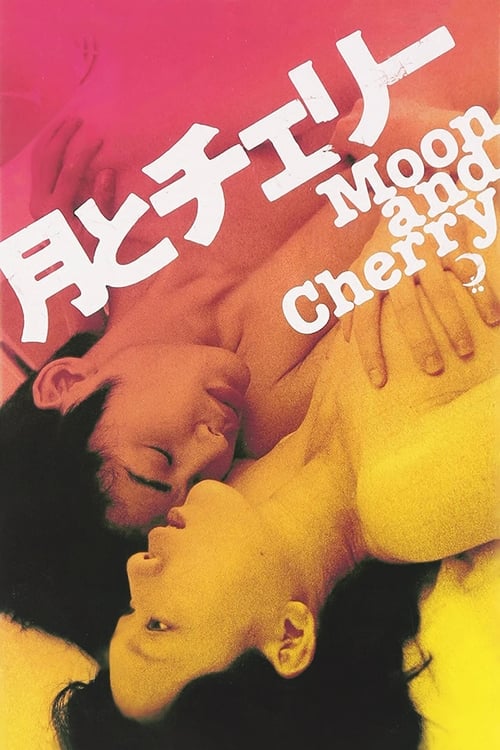
Moon & Cherry
2004
No user ratings available yet
Representation score: 5.5 out of 10
Representation Score
Good
2008
Director
Yuki Tanada
Runtime
79 minutes
Average Rating
No ratings yetNew Showbiz Analysis
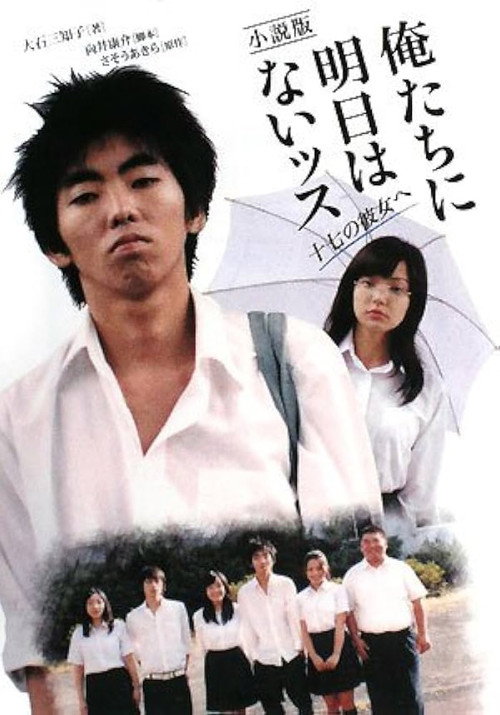
Ain't No Tomorrows functions as a character-driven drama that prioritizes the subversion of institutional authority over traditional morality. The film explores the tension between individual desires and societal expectations through unconventional relationships. While the narrative engages with progressive themes like moral relativism and the disruption of social hierarchies, it lacks explicit markers for racial or LGBTQ+ diversity. The focus remains heavily on localized social dynamics within a homogeneous setting. Ultimately, the film offers a moderate level of thematic engagement by challenging standard archetypes, even as it relies on specific character traits that may border on caricature.
Category Breakdown
The film challenges traditional assumptions by focusing on a non-traditional romantic bond between a student and a teacher. However, it does not explicitly confirm the characters' queer identities or show diverse gender expressions.
The narrative overturns typical power dynamics by putting a male student in a dominant romantic role with an authority figure. It also questions traditional masculine roles through the portrayal of Anpai.
The cast appears ethnically uniform, reflecting a localized Japanese school environment. There is no indication of diverse racial backgrounds or a non-white majority cast.
The film examines moral relativism by focusing on adolescent impulses and social dysfunction. It critiques established social structures by breaking down traditional teacher-student boundaries.
Tomono is introduced as a sickly loner, bringing physical vulnerability into the narrative. It remains unclear if his condition provides him with meaningful character development or simply serves as a plot device.
Present on Screen
Limited or Absent
Official Synopsis
17 year-old Hiruma is desperate to get laid and takes out his sexual urges on Anpai, a fat boy who has "boobs." His classmate Tomono, a sickly loner, is in a serious relationship with their married teacher.
2004

2004

2011
2001
2004

1977

1992

1985
No reviews yet. Be the first to share your thoughts on this movie!
Use the rating form above to leave a star rating and optional review.