You are here:

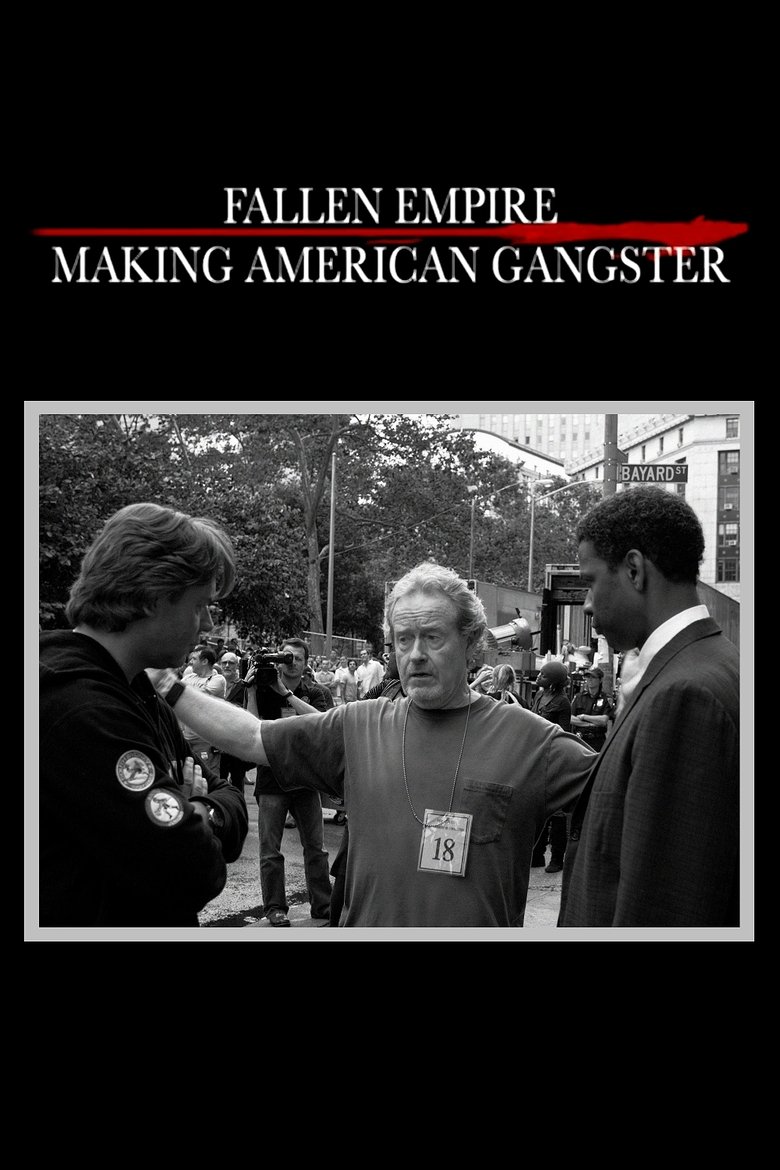
Fallen Empire: Making 'American Gangster'

Fallen Empire: Making 'American Gangster'

Representation Score

2.2/10

Limited

2008

NOT RATED

Director

Charles de Lauzirika

Runtime

78 minutes

Average Rating

No ratings yet

New Showbiz Analysis

Fallen Empire: Making 'American Gangster' primarily serves as a technical retrospective of the filmmaking process. Its focus is narrow, emphasizing the mechanics of period-accurate production and the logistics of a large-scale studio set. The documentary shines in its historical and racial context, particularly in the recreation of Harlem and the portrayal of Black protagonists. However, this focus is technical rather than sociopolitical. Because the work is designed to analyze the craft of filmmaking, it does not delve into identity-driven storytelling or the subversion of traditional gender hierarchies.

Watch this, not that →

Category Breakdown

Does Fallen Empire: Making 'American Gangster' have LGBTQ+ representation?

Minimal

The documentary focuses solely on technical and biographical details. It includes no characters or stories related to LGBTQ+ identities.

How does Fallen Empire: Making 'American Gangster' portray gender?

Limited

Gender roles are limited to the technical crews and main cast members. The film centers on traditional filmmaking structures and the perspectives of lead actors.

How racially and ethnically diverse is Fallen Empire: Making 'American Gangster'?

Good

The film highlights the intentional casting of Denzel Washington and the accurate recreation of 1970s Harlem. It gives prominence to the historical Black experience through Frank Lucas.

How does Fallen Empire: Making 'American Gangster' represent religion and culture?

Fair

The content revolves around the criminal underworld and the power dynamics of the 1970s. It maintains a neutral stance while discussing historical crime.

Does Fallen Empire: Making 'American Gangster' include disability representation?

Minimal

The documentary does not address disability, neurodivergence, or accessibility issues.

Present on Screen

  • Highlights the intentional casting of Black leads.
  • Recreates the racial and socioeconomic textures of 1970s Harlem authentically.
  • Provides context on the historical Black experience through Frank Lucas.

Limited or Absent

  • Includes no representation or exploration of LGBTQ+ identities.
  • Does not address disability, neurodivergence, or accessibility.
  • Maintains traditional filmmaking structures without challenging gender hierarchies.

Official Synopsis

A five-part feature that examines the real-life story behind the film (including interview clips with the real Frank Lucas), the costume design, the film's production, a look at the boxing match, and the film's sound mixing and soundtrack.

How are these scores produced? →

Where to Watch

Rate this Movie

No rating selected
Use arrow keys to select a rating from 1 to 5 stars
Optional text review, maximum 2000 characters
Tip: Wrap spoilers with ||double pipes|| to hide them
0/2000 characters
You must be signed in to submit a rating

Reviews

No reviews yet. Be the first to share your thoughts on this movie!

Use the rating form above to leave a star rating and optional review.