
Sex, Drugs, Rock & Roll
1991
No user ratings available yet
Representation score: 5.8 out of 10
Representation Score
Fair
1967
Director
John Magnuson
Runtime
60 minutes
Average Rating
No ratings yetNew Showbiz Analysis
This documentary captures a key moment of counter-cultural expression through Lenny Bruce's legal and social commentary. It serves as a critique of institutional power rather than a broad demographic survey. The film stands out for its cultural disruption by challenging legal and religious authority. It promotes secularism and individualistic, non-conformist thought. However, it falls short in representing gender, race, or explicit LGBTQ+ identities.
Category Breakdown
The film critiques sexual repression and straight-centered laws through its dialogue, but it does not provide explicit, character-driven LGBTQ+ stories. Instead, it focuses on Bruce's legal struggles.
The movie emphasizes the male experience of 1960s counterculture. It lacks women's ability to drive the story and diverse gender perspectives in the performance footage.
Bruce's comedy dismantles racial stereotypes, but the film's focus is limited to his solo act. This results in minimal direct representation of diverse racial identities.
The film excels at challenging traditional Western institutions. It critiques religious morality and government interference, emphasizing secularism and the right to non-conformist thought.
There is no indication that neurodivergence or physical disabilities are central themes or represented within this specific performance.
Present on Screen
Limited or Absent
Official Synopsis
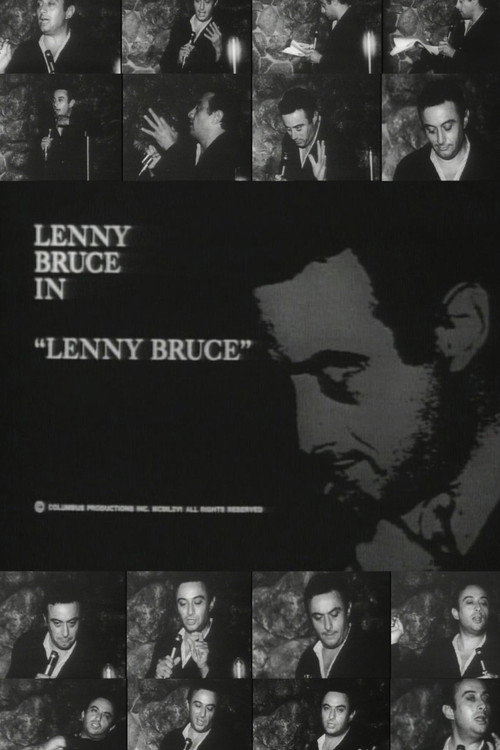
Iconoclast Lenny Bruce appears at San Francisco's Basin Street West in what was his next-to-last live appearance. His act that night consisted of reading allegations and transcripts from one of his several obscenity trials and then commenting on what he'd actually done or said. While there are some "bits" in the performance (including the prison riot with Dutch, the Warden, Father Flotski, and Sabu, the prison doctor), this is much more a social commentary on government intrusion and censorship than it is a comedy routine.
1991
1974
1998
2010
1990
2010

2016
2011
No reviews yet. Be the first to share your thoughts on this movie!
Use the rating form above to leave a star rating and optional review.