Kill the Day
1996
No user ratings available yet
Representation score: 7.7 out of 10
Representation Score
Fair
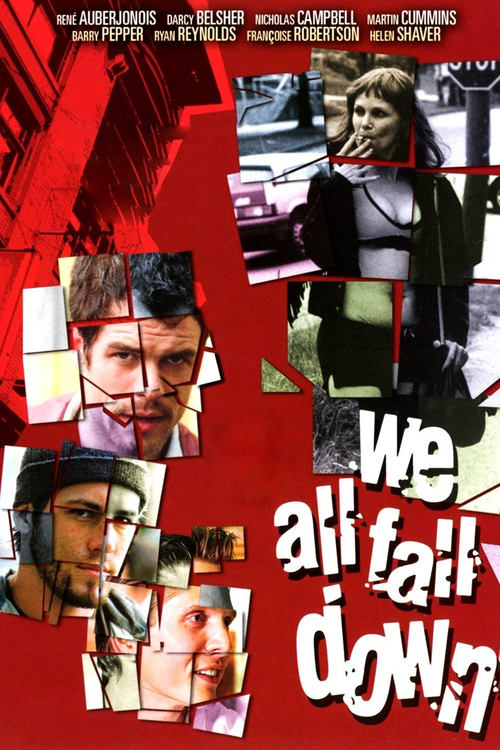
1999
Director
Martin Cummins
Runtime
92 minutes
Average Rating
No ratings yetNew Showbiz Analysis
We All Fall Down is a gritty, character-centric study of personal collapse. The narrative architecture leans toward traditional dramatic structures, focusing on individual struggle rather than broad characters who reflect more than one aspect of diversity. While the film avoids the sanitized morality of mainstream cinema by offering a darker view of human behavior, it lacks intentional demographic breadth. It prioritizes psychological realism over systemic social critique. Ultimately, the film functions as a localized social drama that does not actively disrupt traditional gender, racial, or sexual hierarchies.
Category Breakdown
The film focuses on the interpersonal dynamics between Michael, Kris, and Ryan. There is no explicit evidence of queer identities or relationships outside of traditional heterosexual ones.
The story centers on a male-driven narrative of addiction. Female characters like Ryan and the prostitute appear primarily as catalysts for the male protagonists' emotional arcs rather than as independent agents.
The cast and character descriptions suggest a relatively homogeneous social group. The film does not appear to utilize racial or ethnic diversity as a central narrative pillar.
The film disrupts idealized moral frameworks by exploring addiction and human dysfunction. It moves away from wholesome clichés to focus on the complexities of a downward spiral.
Substance abuse is used to explore psychological struggles and mental health decline. It remains unclear if these struggles provide character's ability to drive the story or serve strictly as plot devices.
Present on Screen
Limited or Absent
Official Synopsis
In this dark independent drama, Michael (Darcy Belsher) is an out of work actor who has been trying to pull himself out of a downward spiral of drug abuse that set in after the death of his mother. Michael's best friend Kris (Martin Cummins) is, if anything, in even worse shape; a gifted artist, Kris' appetite for drugs has all but silenced his muse, and his girlfriend Ryan (Francoise Robertson) has little interest in helping him control his dangerous appetites. The drug-related death of a close friend and a bizarre experience with a junkie prostitute (Helen Shaver) convinces Michael that he needs to clean up once and for all, but Kris may be too far gone to save.
1996
1982
1982
2019
2008
1983
2011

2015
No reviews yet. Be the first to share your thoughts on this movie!
Use the rating form above to leave a star rating and optional review.