
West 47th Street
2001
No user ratings available yet
Representation score: 9.2 out of 10
Representation Score
Good
2004
Director
Marcos Prado
Runtime
121 minutes
Average Rating
No ratings yetNew Showbiz Analysis
Estamira is a profound cinematic deconstruction of the observer/observed dynamic. By centering a woman living with severe schizophrenia in extreme poverty, the film grants her the power to define her own truth. It successfully moves beyond traditional documentary structures to embrace a postmodern perspective. The film's greatest achievement is its refusal to sanitize neurodivergence or social exclusion. Instead of viewing the protagonist through a lens of pity, the work validates her fractured reality and her unique spiritual ability to act. While the film lacks LGBTQ+ representation, it excels in its nuanced treatment of disability and cultural relativism. It provides a raw, unvarnished look at the systemic abandonment found within the global socioeconomic order.
Category Breakdown
The film contains no LGBTQ+ characters or narratives. The story focuses exclusively on the protagonist's socioeconomic and psychological circumstances.
The film centers a woman who is shown as vulnerable yet powerful, with deep intellectual and spiritual strength. She is not portrayed as a submissive figure but as a complex, dominant force.
The film offers an authentic look at the intersection of class and ethnicity in Brazil. It presents a underrepresented, non-white population within the Jardim Gramacho area, avoiding idealized depictions.
The narrative challenges Western rationalism by treating the protagonist's visions as valid ways of seeing the world. It prioritizes personal mysticism over organized religion and criticizes capitalist structures.
This is the film's strongest area, treating schizophrenia as a complex condition rather than a simple plot device. It avoids sanitizing her condition, allowing her delusions to shape the film's reality.
Present on Screen
Limited or Absent
Official Synopsis
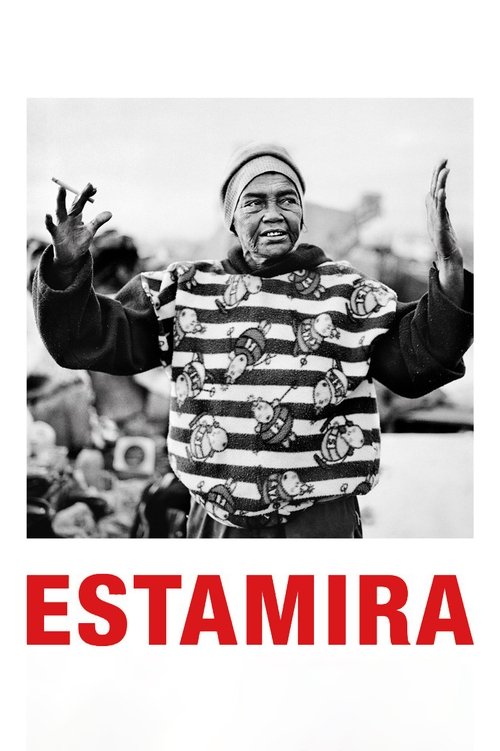
Estamira is a 63-year-old woman who suffers from schizophrenia. She leads a tough life and has supported herself for the past 20 years by picking through garbage at the Jardim Gramacho Disposal Area in Rio de Janeiro. The film follows her starting in 2000, the year she begins treatment in a psychiatric clinic. At first, it is hard to understand her in her stream-of-consciousness sentences, delusions and obsessions. Gradually, however, we get to know her as a woman who can have quiet and lucid moments despite her illness.
2001

2016

2007

2001

2008

2000

2016

2024
No reviews yet. Be the first to share your thoughts on this movie!
Use the rating form above to leave a star rating and optional review.