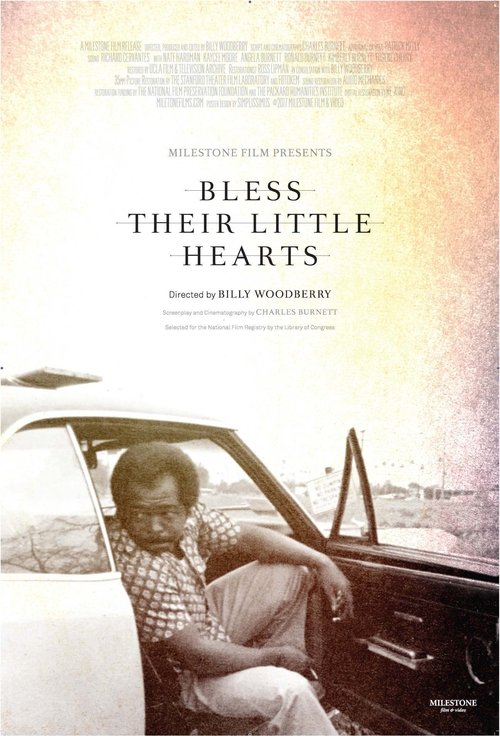
Bless Their Little Hearts
1984
No user ratings available yet
Representation score: 4.9 out of 10

Representation Score
Fair
1980
Director
Billy Woodberry
Runtime
13 minutes
Average Rating
No ratings yetNew Showbiz Analysis
Billy Woodberry’s film challenges crime drama clichés by presenting a character-driven exploration of empathy instead of reductive 'delinquent' archetypes. By adapting Langston Hughes’ work, the film delves into Black literary traditions and systemic socioeconomic struggles. The narrative structure shifts power dynamics, placing a woman in a position of intellectual superiority over a vulnerable male protagonist. This approach challenges traditional institutional authority and punitive justice. While the film excels in racial and cultural authenticity, it lacks representation for LGBTQ+ identities and disabilities, leaving those dimensions unaddressed.
Category Breakdown
The film does not include any explicit LGBTQ+ characters or themes. The story focuses mainly on the interactions between the main characters.
A maternal figure holds a position of authority and moral guidance over a male protagonist. This reverses traditional gender roles by placing the woman in a decisive and stable role.
The film centers around a Black experience by adapting Langston Hughes' work. It uses a creative team that prioritizes authentic racial perspectives over mainstream casting norms.
The story presents a criminal act through the lens of situational ethics and systemic hardship. Jazz influences embed the work in a specific cultural identity that critiques standard narratives.
There is no depiction of physical or neurodivergent disabilities within the narrative.
Present on Screen
Limited or Absent
Official Synopsis
In the course of a botched purse-snatching, a boy comes to question the path of his life. Billy Woodberry’s second film, and first completed in 16mm, adapts Langston Hughes’ short story, Thank You, Ma’am, and features music by Leadbelly, Thelonious Monk and Miles Davis. (Ross Lipman)
1984
1965
1972
1972

2011

1920
1969
1986
No reviews yet. Be the first to share your thoughts on this movie!
Use the rating form above to leave a star rating and optional review.