Men in War
1957
No user ratings available yet
Diversity score: 2.4 out of 10
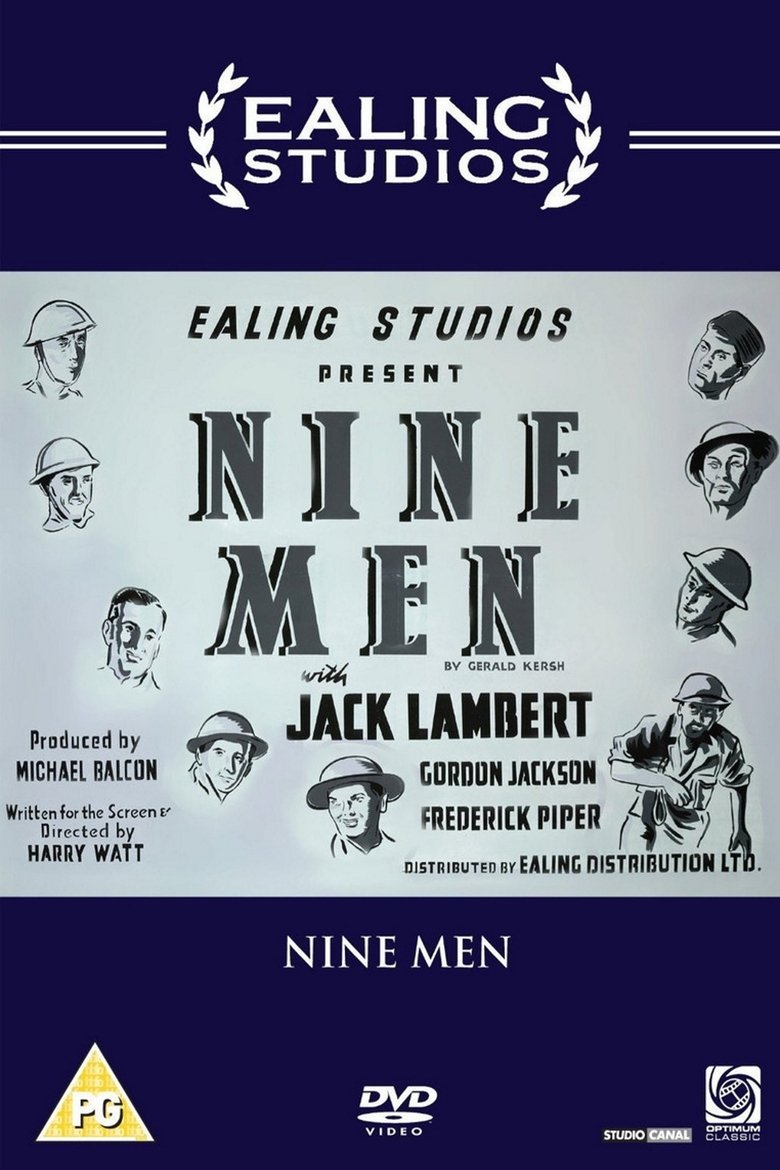
1943
ApprovedDirector
Harry Watt
Runtime
68 minutes
Average Rating
No ratings yetSynopsis
The Nine men of the title are a British WWII Army patrol stuck in a desert fort during the African campaign. The Men must defend the fort against the Italian and German troops until they can be relieved.
Overall Score
Minimal
Category Breakdown
LGBTQ+ Representation
The film contains no visible or implied LGBTQ+ characters or narratives. The social landscape is strictly heteronormative, reflecting the era's demographic constraints.
Gender Representation
The narrative is heavily centered on traditional masculine labor. Agency and physical presence are reserved for men, while the domestic sphere remains an implied, secondary background.
Racial & Ethnic Diversity
The cast is composed of a homogeneous group of white, working-class British miners. There is no evidence of racial blending or non-Anglo-Saxon representation.
Religious & Cultural Diversity
The film emphasizes patriotism and nationalistic duty. Values are centered on social stability, respect for authority, and the preservation of Western institutions.
Disability Representation
The film does not feature characters with disabilities as central agents. The focus remains on the physical capability required for industrial production.
Strengths
Areas for Improvement
AI Analysis
Nine Men functions as a period-specific document of 1940s Britain, prioritizing national cohesion and industrial discipline over diverse representation. The film's narrative architecture is built upon collective labor and the reinforcement of traditional social hierarchies. Because the work aims to document the realities of a specific British mining community during wartime, it reflects the demographic homogeneity of that era. This results in a lack of intersectional perspectives or subversion of established cultural norms. The film treats the human body primarily as a tool for the war effort, focusing on physical capability and masculine-coded labor rather than individual identity or diverse social experiences.
1957
1950
1955
1942
1943
1945
2013

1943
1940

1963
1942
1942
No reviews yet. Be the first to share your thoughts on this movie!
Use the rating form above to leave a star rating and optional review.