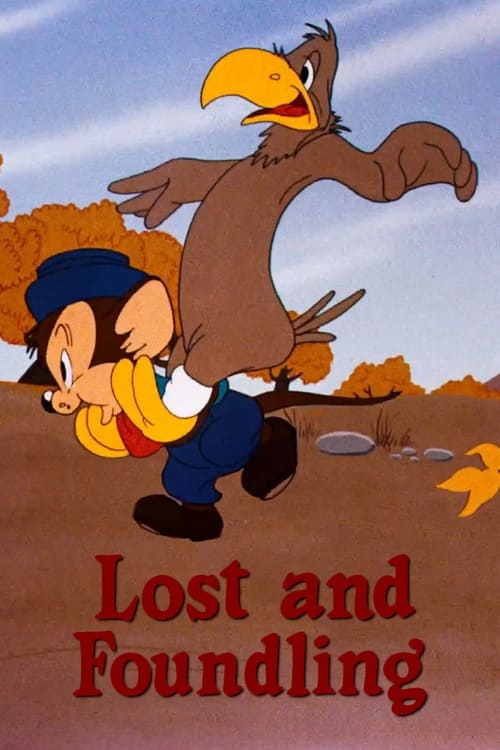
Lost and Foundling
1944
No user ratings available yet
Representation score: 4.5 out of 10

Representation Score
Minimal
1950
NRDirector
Irving Pichel
Runtime
88 minutes
Average Rating
No ratings yetNew Showbiz Analysis
The Great Rupert is a mid-century domestic narrative that emphasizes traditional family values and the sanctity of holidays. Using a squirrel as a guardian angel, the film underscores a sense of benevolent order within the home. The film adheres to the social norms of the 1950s, focusing on a conventional family unit and preserving established Western holiday traditions. Ultimately, the film reinforces mid-century social norms, emphasizing domestic stability and the importance of the nuclear family.
Category Breakdown
The film focuses on a traditional family unit. There is no evidence of non-straight-centered identities or critiques of the assumption that everyone is straight or cisgender within the narrative.
The story centers on a family unit that likely adheres to 1950s domestic hierarchies. There are no specific character arcs indicating a subversion of traditional gender roles.
The film reflects the homogeneous casting standards of 1950. There is no indication of a non-white majority cast or a disruption of Anglo-Saxon centricity.
The narrative emphasizes the sanctity of Christmas and the stability of the home. It functions to uphold traditional Western institutions rather than critique them.
The film provides no information regarding the inclusion or portrayal of characters with physical or neurodivergent disabilities.
Present on Screen
Limited or Absent
Official Synopsis
Shortly before Christmas, a family moves into an apartment where Rupert the squirrel lives in the attic rafters. Just as it seems that the holiday will come and go without so much as a Christmas tree, Rupert acts as the family's guardian angel - not only saving Christmas, but changing their lives forever.
1944

2007

2014

1998

1963
1992

1947
1977
No reviews yet. Be the first to share your thoughts on this movie!
Use the rating form above to leave a star rating and optional review.