
Sister's Younger Husband
2016
No user ratings available yet
Representation score: 4.8 out of 10

Representation Score
Good
2016
Director
Lee Sang-woo
Runtime
97 minutes
Average Rating
No ratings yetNew Showbiz Analysis
Lee Sang-woo’s drama succeeds as a thematic deconstruction of the nuclear family. By prioritizing individual obsession over institutional morality, the film challenges the sanctity of traditional social orders and Confucian-rooted structures. However, the film lacks demographic diversity. It remains a localized study with a culturally homogeneous cast and offers no meaningful representation of LGBTQ+ identities or characters with disabilities. Ultimately, the film's strength lies in its psychological depth and its refusal to reinforce conventional social hierarchies, even as it fails to provide diverse identity-based perspectives.
Category Breakdown
The film focuses on heterosexual relationships and does not explore LGBTQ+ identities. It does not intentionally represent non-binary gender expressions, keeping the conflict centered around traditional gender pairings.
Female characters are shown as having complex, non-traditional desires that challenge patriarchal norms. their ability to act is highlighted through risky and unconventional choices that disrupt traditional household stability.
The cast is culturally uniform, reflecting a specific South Korean context. It functions as a localized character study without incorporating diverse ethnic backgrounds or color-blind casting.
The film critiques traditional social institutions by presenting familial transgressions as psychologically inevitable. It embraces postmodern moral relativism rather than condemning anti-social behaviors systematically.
There is no significant representation of visible or invisible disabilities in the narrative. Characters exist within a typical socioeconomic framework without exploring neurodivergence or physical disabilities.
Present on Screen
Limited or Absent
Official Synopsis
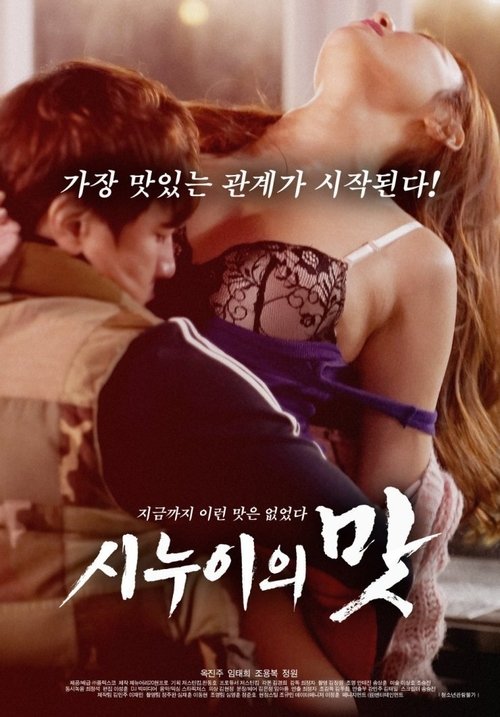
Ji-seon is living with her sister and her husband after a divorce. Her sister Ji-yeong leaves for a work trip and Ji-seon is at home all alone with her brother-in-law. The two can't hide their sexual passion and they cross the line. Every time Ji-yeong leaves, the two enjoy risky sex...
2016

2015
2020
2023

2016
2017
2016
2019
No reviews yet. Be the first to share your thoughts on this movie!
Use the rating form above to leave a star rating and optional review.