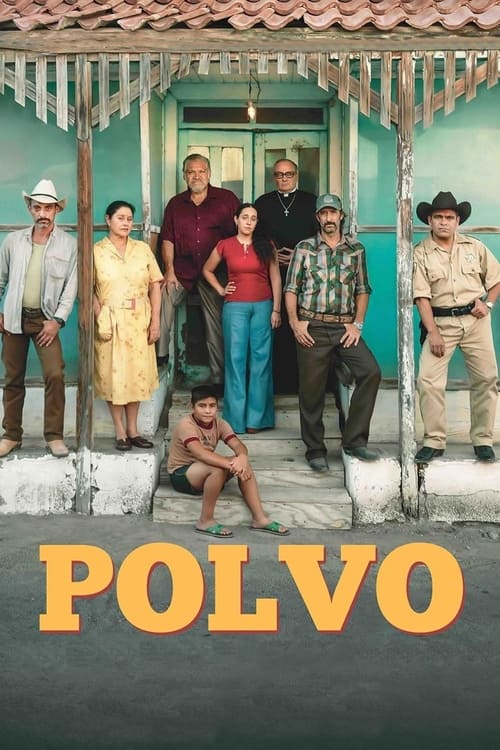
Powder
2019
No user ratings available yet
Representation score: 2.4 out of 10

Representation Score
Minimal
2015
TV-MADirector
Alonso Llosa
Runtime
16 minutes
Average Rating
No ratings yetNew Showbiz Analysis
The film opens on the harsh, beautiful isolation of the Peruvian Andes, grounding its myth in a specific, rugged geography. This visual tone establishes a rural realist framework where the "legend" is not a high-fantasy spectacle but a quiet, eerie presence in the background of daily life. The sold meaning is that truth and personal responsibility are more valuable than magical shortcuts; Charly, a mixed-heritage outsider, must choose between the seductive convenience of the legend’s promise and the mundane reality of his own integrity. The camera lingers on the quiet dignity of rural workers and the landscape, treating the father’s traditional authority as a model of stability rather than a threat. This framing positions the rural community as a functioning society with its own logic, challenging the urban-rural divide without mocking either side. The film’s argument is tested against its internal logic: Charly’s rejection of the legend’s romantic promise is not framed as a failure of masculinity but as a necessary step in his maturation. He is not "fixed" by a wedding or a romantic union, but by his active, honest engagement with life. The last image leaves him alone, physically and emotionally isolated, having rejected the "easy" path. This ending rewards his choice of personal integrity over supernatural convenience, suggesting that true maturity comes from accepting reality, even if it is less glamorous. The legend itself never pays a price; it remains an enigma, preserving its mystery while Charly pays the cost of his choices. In its 2015 context, the film offers a quiet, ironic moral: the "magic" is the problem, not the solution. The humor is dry and situational, arising from the clash between Charly’s urban expectations and rural realities. The father’s stubbornness is played for gentle irony, not ridicule, and the female lead’s connection to the legend makes her unattainable in a mundane way. The film’s low-budget production contributes to its realistic, grounded feel, avoiding the polished constructions of liberal messaging in favor of authentic aesthetics. The final frame settles on Charly’s isolation, affirming the value of personal responsibility and the rejection of escapism.
Category Breakdown
No queer characters appear. The plot follows a straight romance between Charly and the female lead. No same-sex intimacy is depicted.
The female lead is a mysterious, land-tied symbol rather than a full agent. The father acts as a competent authority. Charly rejects romantic union for personal integrity.
Set in the Peruvian highlands, the film features local rural characters. Ethnicity serves as background texture. The story avoids political discourse on indigeneity or colonialism.
Rural tradition and folklore are treated as valid, stable forces. The father’s authority and community logic are respected. The legend is a natural aspect of life, not a supernatural villain.
No disabled characters appear. Physical endurance in the highlands is a realistic detail. There is no medical complexity or impairment represented.
Present on Screen
Limited or Absent
Official Synopsis
The most dangerous drug lord in Peru must face his ultimate fear: moving out of his mother's house.
2019

2020
2014
2010
2008
2012
2003
2018
No reviews yet. Be the first to share your thoughts on this movie!
Use the rating form above to leave a star rating and optional review.