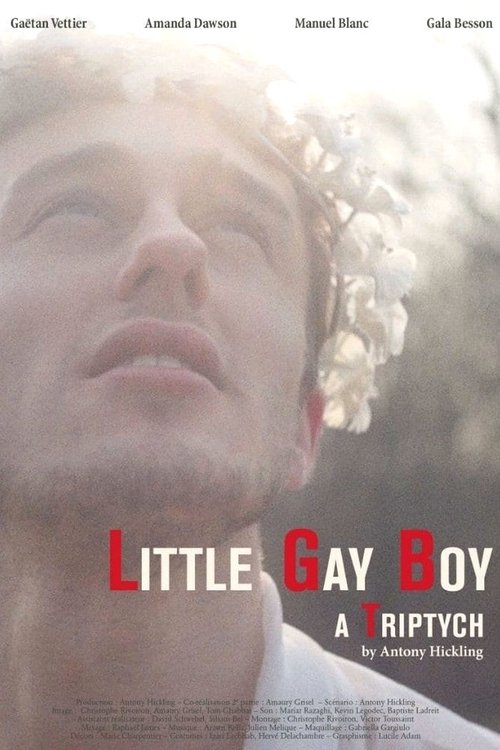
Little Gay Boy
2013
No user ratings available yet
Diversity score: 7.1 out of 10
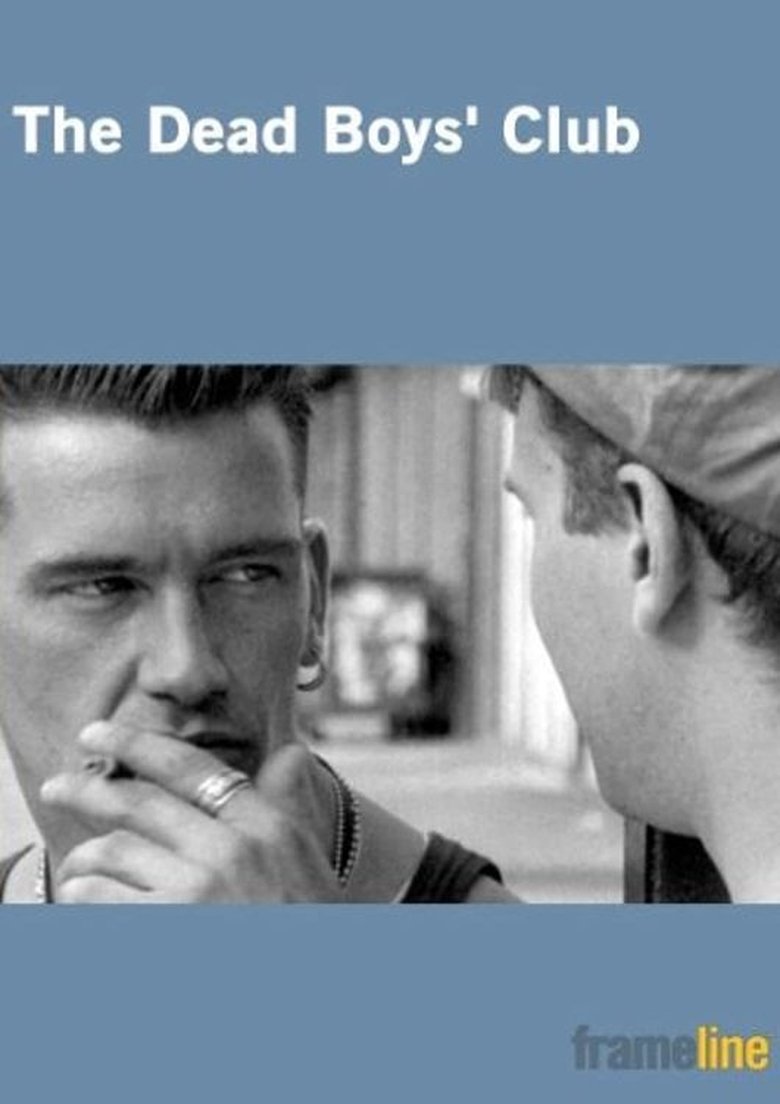
1992
Director
Mark Christopher
Runtime
25 minutes
Average Rating
No ratings yetSynopsis
It's the 1990s. Toby, just out of college in Wisconsin, comes to Manhattan to spend the summer with his older cousin, Packard, a gay man whose lover John R. has just died of AIDS. Toby is shy, the openly-gay society around him makes him nervous. Packard gives Toby a pair of John R.'s shoes; when Toby puts them on, he has powerful visions of the pre-AIDS scene in the 1970s, as if he's there. He also takes on a different personality when he wears the shoes, more sure of himself, able to express his interest in men. Wearing the shoes, Toby goes to a bar, hooks up with Dick, and wakes up in Dick's bed. How will he handle it? And what will happen to the shoes?
Overall Score
Good
Category Breakdown
LGBTQ+ Representation
The film centers queer existence and the historical trauma of the AIDS crisis. It uses magical realism to bridge contemporary struggles with the joy of a pre-AIDS era.
Gender Representation
The narrative disrupts masculine hierarchies by focusing on vulnerability and grief. However, the story remains heavily concentrated on male-centric dynamics and social interactions.
Racial & Ethnic Diversity
The film appears to focus on the experiences of a white queer community. There is no explicit evidence of a multi-ethnic cast or intersectional racial identities.
Religious & Cultural Diversity
The story uses fantasy to reclaim lost queer culture and critiques the fragility of community during an epidemic. It frames loss as a systemic tragedy rather than a moral failing.
Disability Representation
While not centering on physical disabilities, the film addresses the profound impact of chronic illness. It focuses on the social and emotional aftermath of the AIDS crisis.
Strengths
Areas for Improvement
AI Analysis
The Dead Boys' Club is a significant piece of period-specific queer cinema that excels in its sophisticated handling of identity. By using magical realism, the film avoids common tropes and instead presents the queer community as the primary social environment. However, the film's impact is somewhat limited by its narrow demographic focus. The narrative lacks broad racial intersectionality and remains heavily centered on male-dominated perspectives, which restricts the scope of its social critique. Ultimately, the film succeeds as a nuanced exploration of loss and historical erasure. It uses non-linear storytelling to transform a specific era of tragedy into a complex study of fluid identity.
2013
1966
2023
1974
No reviews yet. Be the first to share your thoughts on this movie!
Use the rating form above to leave a star rating and optional review.