
Mujhe Kucch Kehna Hai
2001
No user ratings available yet
Representation score: 1.5 out of 10
Representation Score
Minimal
2001
Director
Goldie Behl
Runtime
169 minutes
Average Rating
No ratings yetNew Showbiz Analysis
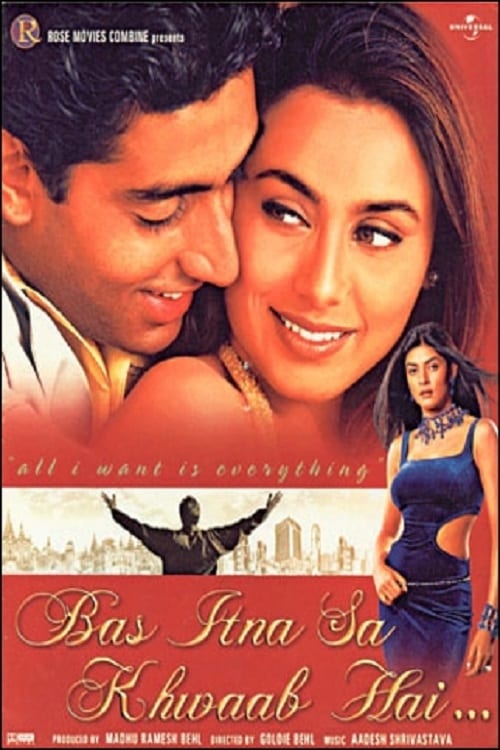
Bas Itna Sa Khwaab Hai is a conventional romantic drama centered on individual aspiration. The narrative follows Suraj's journey to Mumbai to pursue his dreams, a structure that aligns with traditional themes of merit and personal struggle. The film lacks complexity or critique of broader social structures and follows established genre expectations. It functions as a standard exploration of urban ambition within a mainstream Bollywood framework.
Category Breakdown
The film follows typical romantic genre conventions and does not include non-cisgender identities or critiques of the assumption that everyone is straight.
The story revolves around a male protagonist named Suraj. Although the romance genre suggests a strong female presence, there is no evidence of women taking control or disrupting patriarchal structures.
Set in Mumbai and produced in Hindi, the film features South Asian actors. However, it does not intentionally mix diverse ethnic identities.
The narrative emphasizes individual ambition and the challenges of pursuing dreams within an urban Indian context, reinforcing traditional values of perseverance.
There is no indication that neurodevelopmental differences or physical disabilities are integrated into the storylines or used as meaningful narrative elements.
Present on Screen
Limited or Absent
Official Synopsis
Suraj dreams of following in his idol's footsteps, but as he moves to Mumbai to follow his dream, he discovers that following your dreams may have a cost.
2001

1989

2010

2009

2017

2014

2008
1999
No reviews yet. Be the first to share your thoughts on this movie!
Use the rating form above to leave a star rating and optional review.