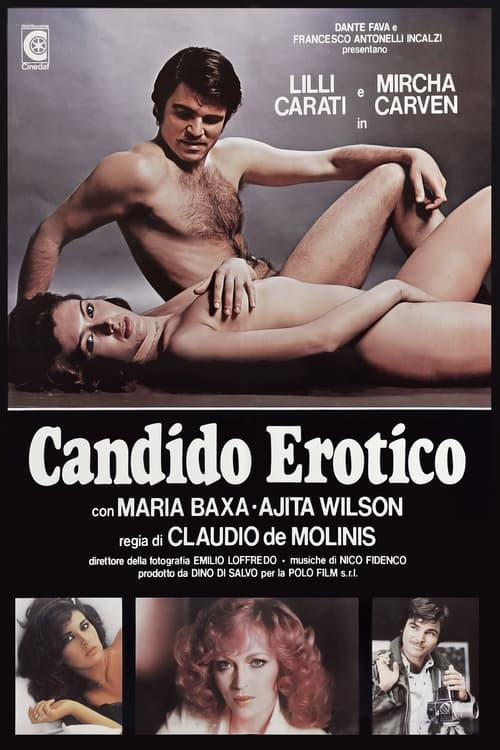
The Exhibitionist
1978
No user ratings available yet
Representation score: 3.9 out of 10

Representation Score
Limited
1985
Director
Joe D'Amato
Runtime
93 minutes
Average Rating
No ratings yetNew Showbiz Analysis
The Pleasure is a transgressive erotic drama that emphasizes sexual exploration over broader social representation. It excels in subverting traditional gender roles, particularly through women's ability to drive the story and the deconstruction of conventional domesticity. However, the film is limited by its historical context and a strictly straight-centered framework. It lacks engagement with LGBTQ+ identities or racial diversity, reflecting the homogeneous society of 1930s Italy. Ultimately, the film serves as a study of moral relativism rather than a diverse social landscape.
Category Breakdown
The film focuses on heterosexual relationships and past romances, without including any stories about LGBTQ+ individuals or non-binary gender identities. It follows traditional erotic drama themes.
Ursula challenges traditional gender roles by using her mother's legacy to actively shape her environment. The film highlights a woman's hidden, independent sexual life, which contrasts with typical domestic femininity.
Set in 1930s Italy, the cast is mostly white. The story reflects the homogeneous population of the time without incorporating racial diversity or broader multicultural representation.
The story questions rigid social structures by blurring the lines between acceptable and unacceptable behaviors. It dismantles the ideal family unit through a lens of moral relativism.
There are no visible or invisible disabilities that play a central role in the character arcs or the plot progression.
Present on Screen
Limited or Absent
Official Synopsis
Italy in the early 1930s. To the elderly aristocrat Gerard, all that is left of Leonora, the love of his life, are a number of erotic tape recordings. She led a double life as respectable wife and mother of two, and as a whore at the local brothel. Now, after her death, her children Ursula and Edmund pass under the tutelage of Gerard. Having not seen them for many years, he is utterly bewildered by Ursula's uncanny likeness to her mother. While Gerard's mistress Fiorella takes care of Edmund's sexual needs, Ursula follows the last instructions of her mother. In the process, she uses the legacy of her mother's recordings to get into the mindset of her relationship with Gerard. Is Gerard ready to find his lost love Leonora again... in the likeness of her very daughter?
1978
1979

1986
2011
1976
1994
1991
1984
No reviews yet. Be the first to share your thoughts on this movie!
Use the rating form above to leave a star rating and optional review.