
After Truth: Disinformation and the Cost of Fake News
2020
No user ratings available yet
Diversity score: 5.7 out of 10
2015
NRDirector
Yael Melamede
Runtime
89 minutes
Average Rating
No ratings yetSynopsis
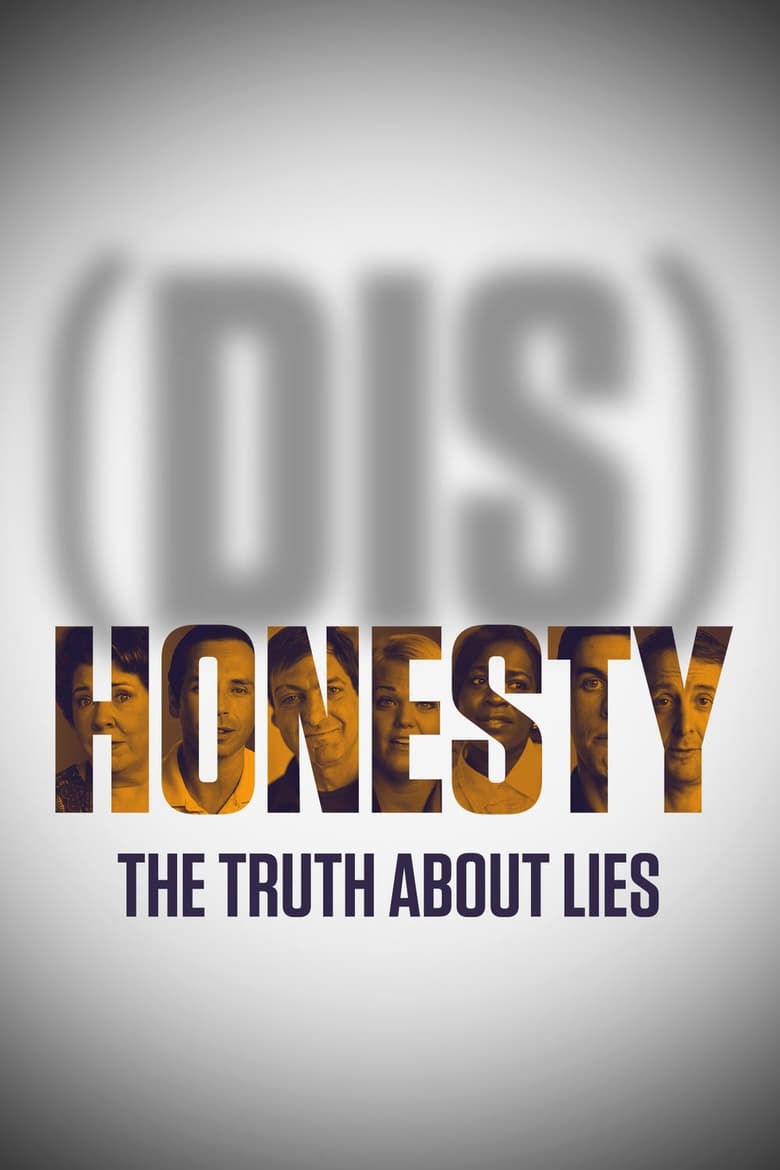
Documentary exploring the human tendency to be dishonest. Inspired by the work of social scientist, Dan Ariely, the film interweaves personal stories, expert opinions, behavioral experiments, and archival footage to reveal how and why people lie.
Overall Score
Fair
Category Breakdown
LGBTQ+ Representation
The documentary lacks specific narrative arcs centered on LGBTQ+ identities. While no derogatory tropes are present, the absence of queer-coded storylines results in a neutral score.
Gender Representation
The film maintains a gender-neutral focus on cognitive biases and human behavior. It does not explicitly engage with gender hierarchies or critiques of masculinity and femininity.
Racial & Ethnic Diversity
The film adopts a globalized perspective through the work of Dan Ariely. It suggests a cross-cultural application of psychological principles rather than a strictly Western-centric viewpoint.
Religious & Cultural Diversity
The narrative critiques how media and political institutions utilize misinformation. It explores a post-truth environment where the distinction between objective reality and perceived truth is fluid.
Disability Representation
Neurodivergence and physical disabilities are not central to this exploration of deception. The film treats the lying brain as a standard cognitive subject without specific inclusive representation.
Strengths
Areas for Improvement
AI Analysis
*(Dis)Honesty: The Truth About Lies* functions as a psychological inquiry into the mechanics of deception. It utilizes a modular architecture of behavioral experiments and expert testimony to deconstruct the concept of objective truth. Rather than following a traditional character-driven narrative, the film frames dishonesty as a systemic phenomenon embedded within social and institutional structures. The documentary's strength lies in its intellectual framework. By applying a postmodern lens, it challenges the stability of traditional moral pillars and interrogates how truth is manufactured by power structures. This provides a sophisticated critique of contemporary social systems. However, the film lacks high-density demographic representation. Because it focuses on universal human tendencies and cognitive biases, it misses opportunities to explore how identity, gender, or specific cultural backgrounds influence the experience of honesty and deception.
2020
2014
2018

2022

2021
2017

2023

2023
2009

2012

2014

2018
No reviews yet. Be the first to share your thoughts on this movie!
Use the rating form above to leave a star rating and optional review.