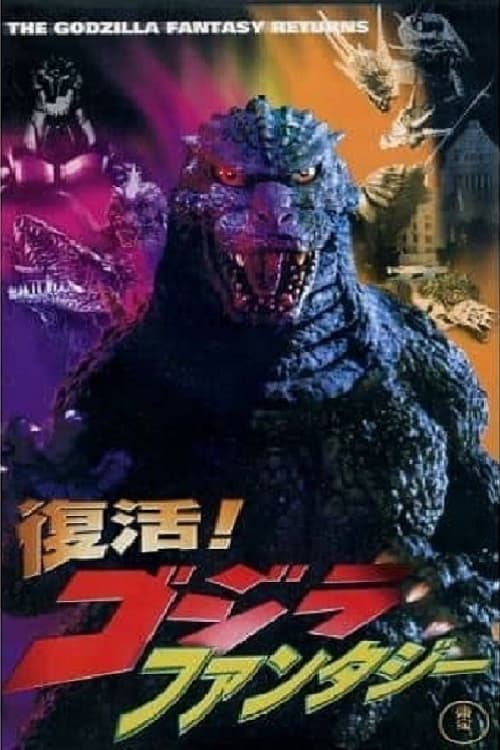
Revival! Godzilla Fantasy
1997
No user ratings available yet
Representation score: 1.3 out of 10
Representation Score
Fair
1984
Director
Senkichi Taniguchi, Ishirō Honda
Runtime
135 minutes
Average Rating
No ratings yetNew Showbiz Analysis
Godzilla Fantasia is a formalist musical exercise that celebrates Akira Ifukube's compositions using montage sequences from various science fiction films. It provides strong cultural visibility by centering Japanese cinematic history and musical artistry. However, its non-narrative structure prevents the inclusion of complex, multi-layered character dynamics or diverse social identities. The film prioritizes aesthetic and auditory experience over character-driven storytelling, making it challenging to evaluate traditional diversity metrics like gender or LGBTQ+ representation.
Category Breakdown
As a musical compilation, the work lacks character arcs and does not depict any LGBTQ+ identities.
The footage focuses on monster films that emphasize male-dominated hierarchies, limiting nuanced gender dynamics.
The film highlights Japanese cinematic history and the legacy of composer Akira Ifukube, providing significant visibility for a non-Western cinematic tradition.
It emphasizes a specific Japanese aesthetic by framing monster cinema through a symphonic lens, offering a cultural perspective outside the typical Western blockbuster framework.
The film focuses on sound and visual spectacle, with no indication of characters or themes addressing physical or neurodivergent disabilities.
Present on Screen
Limited or Absent
Official Synopsis
Akira Ifukube has arranged music from his fantastic films into a three-movement symphony, presented here with scenes from the films the music was originally written for. The second half features Makoto Inoue's synthesizer arrangements of Ifukube's music. In this portion, all the music is by Ifukube, but it shows scenes from films Ifukube did not work on. Showcases footage from various monster and science fiction films from Ishiro Honda as well as scenes from Senkichi Taniguchi's Adventure of Kigan Castle.
1997
1968
1977
2003
2017
2021
2019
1967
No reviews yet. Be the first to share your thoughts on this movie!
Use the rating form above to leave a star rating and optional review.