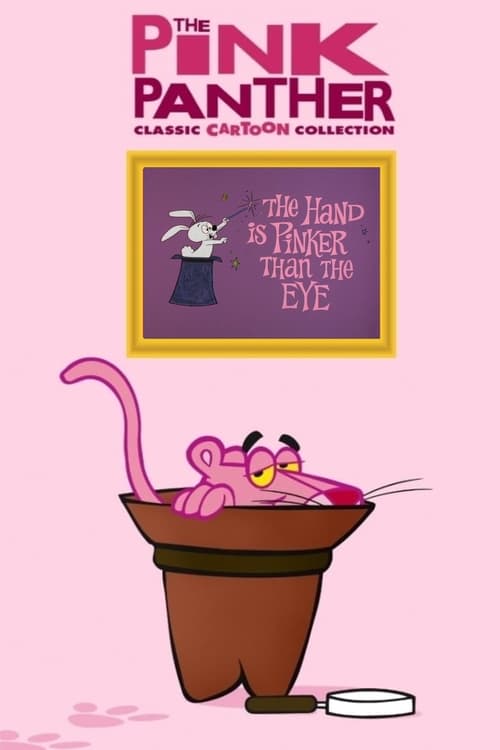
The Hand Is Pinker Than the Eye
1967
No user ratings available yet
Diversity score: 1.4 out of 10
No Poster Available
1969
GDirector
Hawley Pratt
Runtime
6 minutes
Average Rating
No ratings yetSynopsis
A stagecoach owner is going out of business if the train (rode by Roland) makes it to the other side, so they hire Rattfink to stop the train, but doesn't work.
Overall Score
Limited
Category Breakdown
LGBTQ+ Representation
The film lacks any depiction of non-heteronormative identities or same-sex intimacy. The plot focuses entirely on a professional rivalry between characters.
Gender Representation
The narrative centers on traditional archetypes like the stagecoach owner and Rattfink. There is no evidence of female agency or the disruption of masculine leadership roles.
Racial & Ethnic Diversity
Set in the Deadwood era, the film appears to adhere to the homogeneous casting norms of 1969 animation. No non-Anglo-Saxon characters are identified.
Religious & Cultural Diversity
The story utilizes a standard Western framework centered on capitalist competition. It lacks any significant critique of Western institutions or moral relativism.
Disability Representation
There is no evidence of characters with visible or invisible disabilities. No such characters are portrayed as part of the narrative fabric.
Strengths
Areas for Improvement
AI Analysis
The Deadwood Thunderball is a conventional genre piece that prioritizes slapstick comedy over social commentary. The narrative follows a standard pursuit-and-failure loop involving a stagecoach owner and a train, focusing on situational humor rather than character depth. Representation is minimal, as the film relies on established Western tropes and traditional archetypes. The conflict is purely mechanical and professional, offering no disruption of social hierarchies or intersectional perspectives. Ultimately, the work functions as a period-typical animation. It maintains a traditionalist approach to storytelling, lacking any progressive intent or systemic subversion within its short-form structure.
1967
1966
1967
1966
1970
1969
1968
1968
1965
1966
1945
1960
No reviews yet. Be the first to share your thoughts on this movie!
Use the rating form above to leave a star rating and optional review.