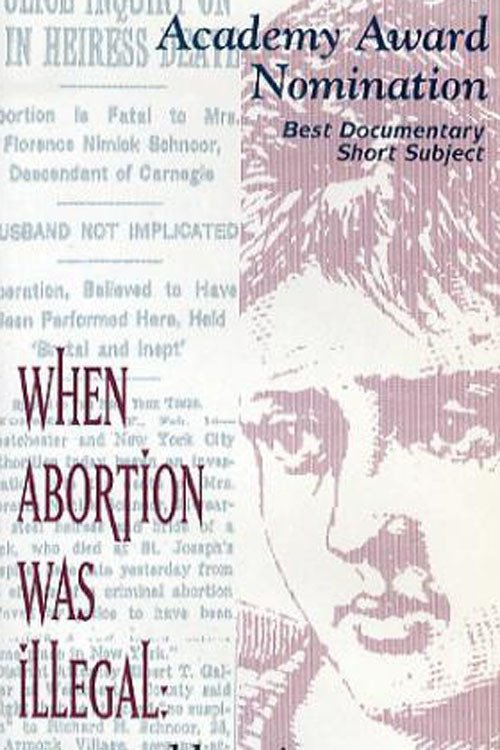
When Abortion Was Illegal: Untold Stories
1992
No user ratings available yet
Representation score: 8.9 out of 10
Representation Score
Excellent
1992
TV-MADirector
Susan Froemke, Deborah Dickson, Albert Maysles
Runtime
67 minutes
Average Rating
No ratings yetNew Showbiz Analysis
This documentary moves beyond political binaries by focusing on the lived experiences of women over seven decades. It shifts the focus from abstract ideological battles to the concrete realities of individual ability to act and bodily autonomy. The film's greatest strength lies in its subversion of traditional gender hierarchies, presenting a multifaceted view of womanhood that resists simplistic, institutionalized definitions. However, the narrative remains anchored in a traditional biological framework, resulting in a lack of intentional inclusion regarding queer-specific narratives or disability-focused perspectives.
Category Breakdown
The film focuses on reproductive experiences and biological realities for those whose gender matches what they were assigned at birth. It doesn't include stories about non-cisgender identities or queer perspectives.
The documentary highlights women as active decision-makers rather than passive subjects. It challenges idealized feminine archetypes by examining the psychological friction of reproductive choices.
The film includes a wide range of racial and ethnic voices, adding important texture to the socio-political landscape.
The narrative critiques rigid religious and legal frameworks by framing conflicts as situations where individual autonomy clashes with systemic morality.
Characters with visible or invisible disabilities are not central to the plot. The film does not address this category.
Present on Screen
Limited or Absent
Official Synopsis
An intensely personal exploration of an explosive issue -- abortion in America. Wrenching first-person narratives from seven decades of women, each one facing an unplanned pregnancy -- and the dreadful decision that no one wants to make. Both pro-life and pro-choice, both out front on the picket line and inside the clinic, these women's stories turn politics into heart-searing drama: a pregnant 17-year-old and her pro-life mother whose conflict unfolds in front of the camera; a 22-year-old who became a pro-life protester when she learned that her mother nearly aborted her; an unhappy mother-of-two who's expecting a third when her marriage suddenly hits the rocks; a 71-year-old grandmother who still grieves for her mother, an early victim of illegal abortion. In this fusion of past and present, the history of abortion is the history of women -- told at a time in America when yesterday's back-alley abortions may be the only choice left for tomorrow.
1992
2018
2016
2010
2022
2016
2020
2022
No reviews yet. Be the first to share your thoughts on this movie!
Use the rating form above to leave a star rating and optional review.