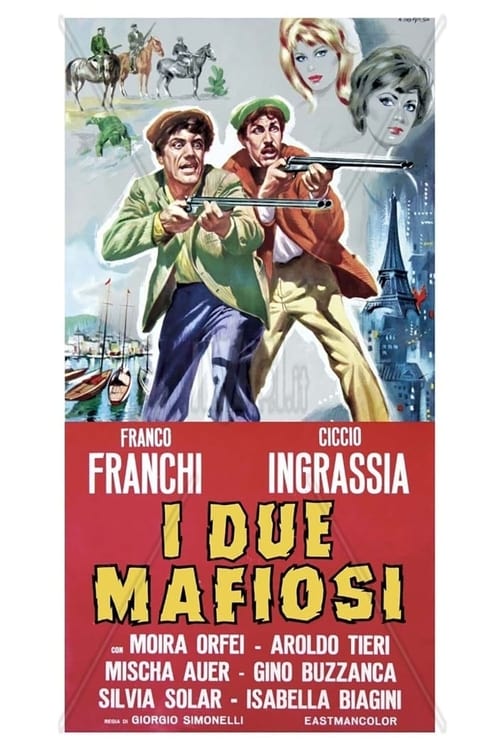
The Two Mafiosi
1964
No user ratings available yet
Diversity score: 2.6 out of 10

1964
Director
Giorgio Simonelli
Runtime
107 minutes
Average Rating
No ratings yetSynopsis
In Sicily Franco and Ciccio are empowered by a local mafia man to guard for a wide range of salad. In reality however this is not simple salad vegetables but marijuana; the two bungling fools and friends do not realize it at first.
Overall Score
Limited
Category Breakdown
LGBTQ+ Representation
The film offers no evidence of LGBTQ+ characters or non-cisnormative identities. It operates within the conventional social frameworks typical of 1960s Italian cinema.
Gender Representation
The narrative focuses on a male-centric comedic duo. There is no indication of female characters possessing significant agency or the subversion of gender hierarchies.
Racial & Ethnic Diversity
Set in Sicily, the film reflects the homogeneous social landscape of the region. It lacks a diverse cast that challenges the period's social norms.
Religious & Cultural Diversity
The plot touches on the Mafia through a comedic lens of bungling fools. It lacks systemic critique, leaning instead into traditional slapstick tropes.
Disability Representation
There is no information available regarding the portrayal of physical or neurodivergent characters in this production.
Strengths
Areas for Improvement
AI Analysis
I due toreri is a traditional period comedy that adheres to the established demographic norms of its era. The film relies on situational absurdity and the comedic incompetence of its leads rather than social commentary. The narrative structure prioritizes masculine archetypes and slapstick tropes. It functions as a genre piece that reinforces, rather than disrupts, the conventional social hierarchies of 1960s Italy. Ultimately, the film lacks the intentionality required to address identity-based diversity, focusing instead on a classic comedy of errors involving illegal trade.
1964
1966
1984
1967
1971
1975
1968
1948
1961
2009
1982
1977
No reviews yet. Be the first to share your thoughts on this movie!
Use the rating form above to leave a star rating and optional review.