Killing for the Prosecution
2018
No user ratings available yet
Representation score: 4.8 out of 10
Representation Score
Fair
2022
Director
Kazuya Shiraishi
Runtime
128 minutes
Average Rating
No ratings yetNew Showbiz Analysis
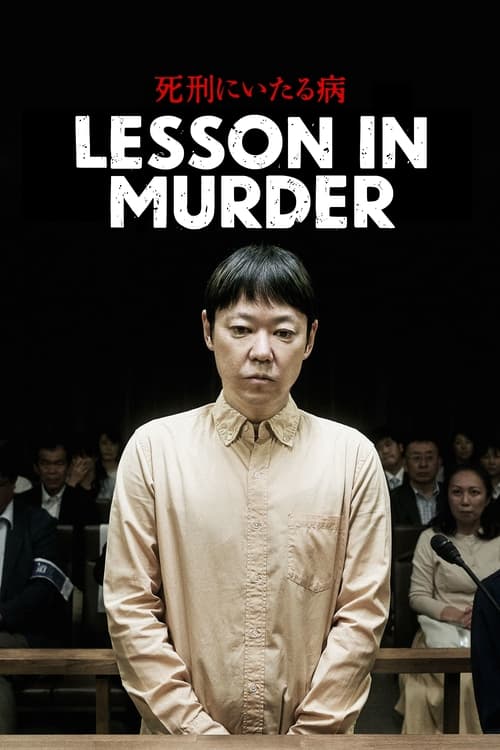
Lesson in Murder is a psychological thriller that prioritizes the deconstruction of institutional certainty over demographic representation. It functions as a mystery exploring the subjective nature of memory and the fallibility of the legal system. The film's narrative strength lies in its challenge to state-sanctioned justice. By centering on a death row inmate's claim of innocence, it disrupts the expectation of absolute judicial truth. However, the work lacks breadth in multi-layered categories. It remains focused on a traditional, homogeneous, and male-centric framework, offering little visibility for LGBTQ+, diverse racial, or gender-subversive perspectives.
Category Breakdown
The film does not include any explicit LGBTQ+ characters or narratives. The story revolves around the psychological tension between a student and a convict.
The narrative centers on a male-dominated investigative dynamic. There is no immediate evidence of women in positions of significant influence or intellect.
As a Japanese production, the cast and setting reflect a homogeneous demographic. The film does not use diverse casting to challenge ethnic norms.
The film offers a complex critique of institutional certainty. It engages with moral relativism by questioning the validity of death penalty convictions.
There is no specific evidence regarding physical or neurodivergent disabilities. The protagonist's gloominess suggests psychological distress but lacks clear ability to act.
Present on Screen
Limited or Absent
Official Synopsis
Masaya is a university student, but he attends a school that's not his ideal school. His days are generally gloomy. One day, he receives a letter from serial killer Haimura. He was convicted for nine murders and received the death penalty. Back when Haimura was committing his murders, he ran a bakery store. At that time, Masaya was a middle-school student and a customer at his bakery store. According to the letter, Haimura confesses to having committed eight murders, but he insists that he did not commit the last murder. Masaya begins to investigate the last murder case involving Haimura.
2018

2016

2017

2008

2017

2011

2013

1943
No reviews yet. Be the first to share your thoughts on this movie!
Use the rating form above to leave a star rating and optional review.