
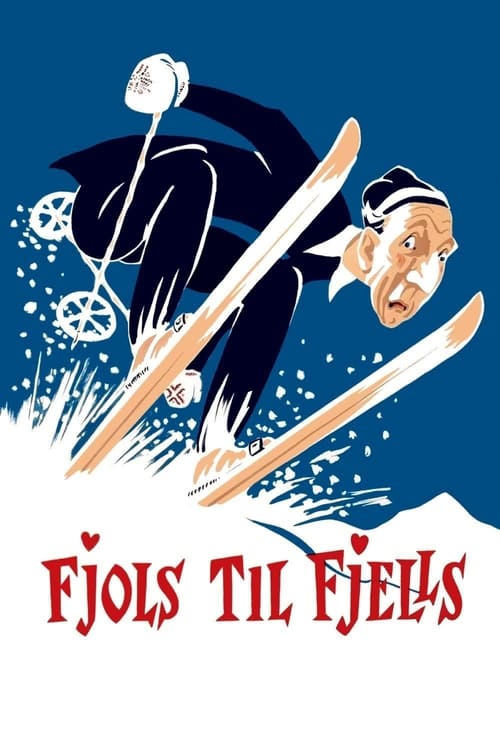
Fools in the Mountains
2020
No user ratings available yet
Representation score: 4.7 out of 10
Representation Score
Limited
1957
Director
Edith Carlmar
Runtime
101 minutes
Average Rating
No ratings yetNew Showbiz Analysis
Fools in the Mountains is a traditional social comedy set in 1957 Norway. The film operates within the demographic structures of its time, focusing on localized social friction rather than multi-layered complexity. While the presence of a pioneering female director like Edith Carlmar suggests potential for nuanced character development, the narrative remains largely homogeneous. The story centers on service staff and guests within a specific, culturally narrow framework. Ultimately, the film lacks representation of diverse racial, sexual, or physical identities, functioning as a period-specific snapshot of mid-century social norms.
Category Breakdown
The film doesn't include any explicit LGBTQ+ characters or narratives. Given its 1957 setting, the story likely follows the traditional social norms of the time.
The story focuses on interactions between staff and guests. While Edith Carlmar's direction might offer subtle challenges to mid-century hierarchies, there are no clear examples of women in leadership roles.
Set in a Norwegian mountain hotel, the film seems to focus on a local social ecosystem. It lacks a multi-ethnic cast, reflecting the demographic homogeneity of post-war Norway.
The comedy explores social friction and dysfunction within a hospitality setting. It lacks an explicit systemic critique, focusing instead on the breakdown of social order and service.
There is no mention of characters with visible or invisible disabilities. The narrative provides no information about neurodivergence or physical impairments.
Present on Screen
Limited or Absent
Official Synopsis
At a high mountain hotel in Norway, porter Poppe tries to do the best he can for the guests with an often unhelpful piccolo Rudolf. This, however, leads to a lot of problems, and Poppe thinks some of the guests behave inappropriate.
2020
1967

1971
1962

1985
1965
1977
1967
No reviews yet. Be the first to share your thoughts on this movie!
Use the rating form above to leave a star rating and optional review.