The Purple Plain
1954
No user ratings available yet
Representation score: 3.1 out of 10
Representation Score
Limited
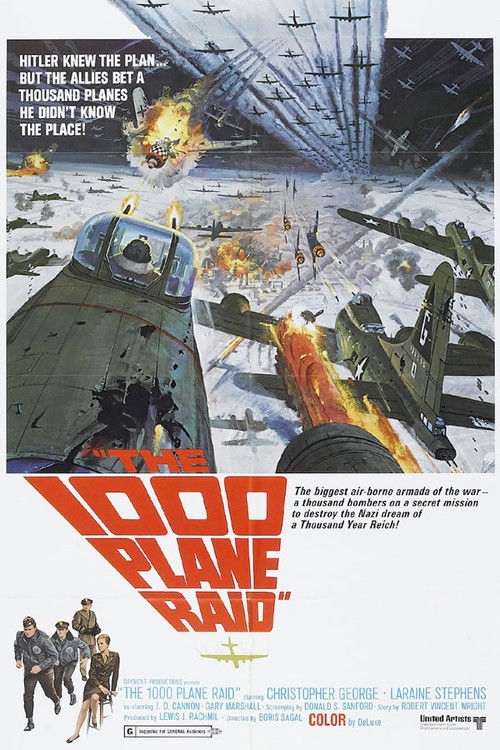
1969
GDirector
Boris Sagal
Runtime
93 minutes
Average Rating
No ratings yetNew Showbiz Analysis
The film adheres to the conventions of 1960s wartime adventure cinema, emphasizing traditional social roles and institutional hierarchies. It explores themes of military leadership and duty in a straightforward manner. While the inclusion of a female officer offers some visibility, her role is often defined by her relationship to the male protagonist. The film lacks complexity in its portrayal of LGBTQ+ and racial diversity, reflecting the norms of the time. Ultimately, the work does not challenge the status quo, instead reinforcing the mid-century Western military structures.
Category Breakdown
The film centers on the heterosexual relationship between Colonel Brandon and Gabrielle Ames. There is no indication of queer subtext or diverse gender identities.
Lieutenant Gabrielle Ames is a woman in a military role, providing visibility for women in combat positions. However, her role seems closely tied to the male lead, often defined by her relationship to him.
The film depicts a predominantly white cast, reflecting the demographics of mid-century Western military narratives. There is no indication of racial diversity among the characters.
The narrative emphasizes traditional Western values and military service, focusing on institutional duty and cooperation. It does not explore secular or anti-Western cultural perspectives.
There is no mention of characters with disabilities, either visible or invisible, within the narrative.
Present on Screen
Limited or Absent
Official Synopsis
In 1943, Colonel Greg Brandon, stationed at an United States Army Air Forces 8th Air Force, 103rd Bomb Group base in England, repeatedly attempts to persuade superiors that massive daylight bombing will hasten the end of World War II. In spite of the mission's extreme difficulty, his plan is finally put into effect against a German aircraft factory. During preparation for the raid, Brandon alienates his men by insisting that normal bombing operations continue. His disdain for cautious Lieutenant Archer and brash RAF Wing Commander Trafton Howard further antagonizes his associates, including his girl friend, WAC Lieutenant Gabrielle Ames. When his bomber crashes the morning of the mission, Brandon boards a bomber manned by Archer and Howard. During the effective air raid, he is impressed by Archer's courage and Howard's judgment.
1954
1949
1945
1966
1969
1949
1953
1955
No reviews yet. Be the first to share your thoughts on this movie!
Use the rating form above to leave a star rating and optional review.