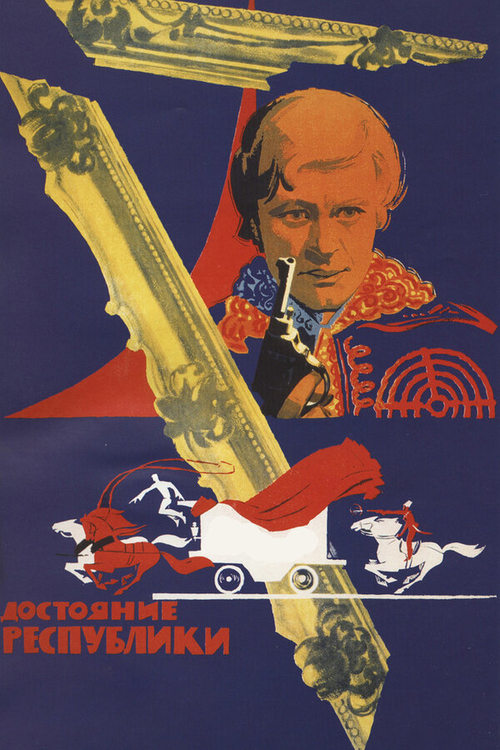
The Property of Republic
1972
No user ratings available yet
Representation score: 3.5 out of 10
Representation Score
Limited
1976
Director
Grigori Kromanov
Runtime
143 minutes
Average Rating
No ratings yetNew Showbiz Analysis
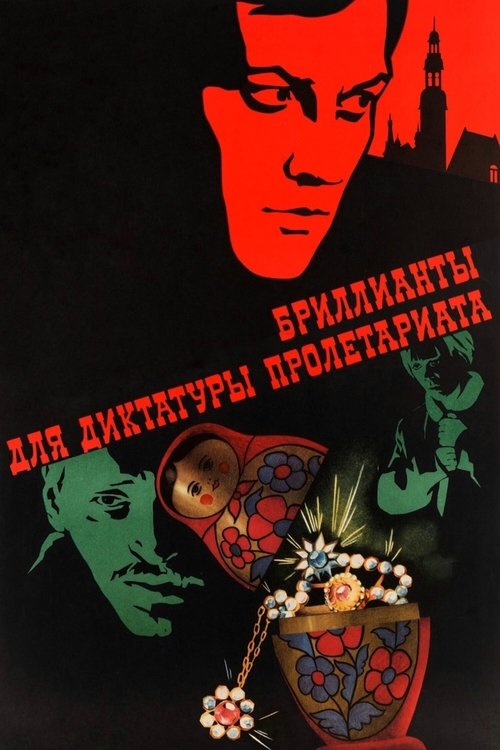
Diamonds for the Dictatorship of the Proletariat is a period-specific political drama that prioritizes state-centric narratives over contemporary identity politics. The film functions as a historical reconstruction of 1921 espionage, focusing on the recovery of stolen state assets. The narrative architecture reinforces traditional masculine archetypes, such as the scout and the agent. While it offers strong cultural immersion into the ideological frameworks of the Soviet era, it lacks engagement with modern concepts of multi-layered identity. Ultimately, the film serves as a critique of private ownership and corruption, aligning with socialist realism rather than social diversity.
Category Breakdown
The film focuses on state security and espionage. There is no evidence of LGBTQ+ identities or non-conforming gender expressions.
The story centers on male-dominated spheres like the Cheka and diplomatic espionage. While Kozlovskaya appears, her role is tied to the crime rather than challenging traditional gender roles.
The cast reflects the specific geopolitical landscape of bk21. It depicts interactions between Soviet and German nationals but lacks broader non-Western ethnic diversity.
The plot explores the tension between individualist intellectualism and the collective revolutionary mandate. It prioritizes state stability and the reclamation of resources for the proletariat.
There is no documented evidence of characters with disabilities being used as central plot devices or portrayed with specific ability to act.
Present on Screen
Limited or Absent
Official Synopsis
In 1921, the Cheka became aware that gold and jewelry were stolen from the treasury of Gokhran, and that a special organization was involved in transporting the stolen to Estonia. Scout Maksim Isayev is sent to this country. He establishes that the cipher of the Soviet embassy Olenetskaya works for the German resident Nolmar, with whom employees of Gokhran Kozlovskaya and an appraiser Yakov Shelekhes are associated. As a result of the provocation, Isayev was arrested. In the prison cell, he finds himself together with the famous Russian writer Nikandrov, who could not find himself in post-revolutionary Russia and went abroad. Released soon by the efforts of his comrades, Isayev continues the struggle for the fate of Nikandrov — for his return to his homeland.
1972
1971

2016

1969
1964
1969
1992
1956
No reviews yet. Be the first to share your thoughts on this movie!
Use the rating form above to leave a star rating and optional review.