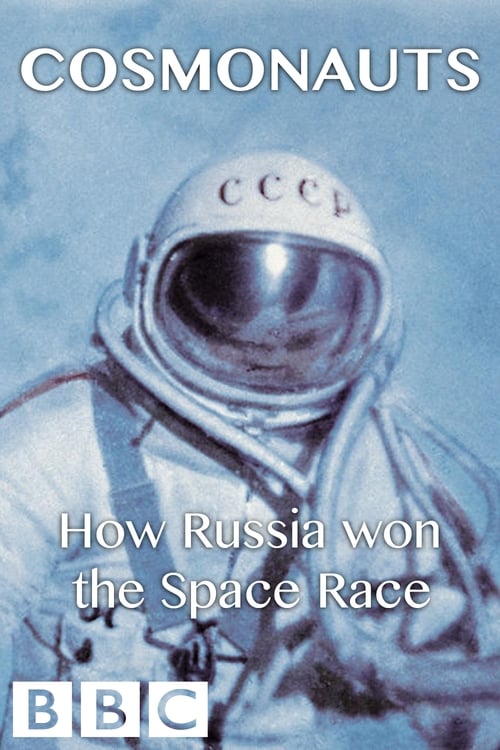
Cosmonauts: How Russia Won the Space Race
2014
No user ratings available yet
Representation score: 3.5 out of 10

Representation Score
Fair
2005
Director
Mark Everest, Christopher Spencer
Runtime
240 minutes
Average Rating
No ratings yetNew Showbiz Analysis
Space Race functions as a dual-perspective historical study that prioritizes geopolitical tension over traditional hero-centric mythmaking. By centering both Sergei Korolev and Wernher von Braun, the series offers a more nuanced view of systemic power dynamics than a standard Western victory narrative. However, the production remains bound by the rigid social hierarchies of the mid-20th century. The focus on technical ability to act within male-dominated aerospace environments results in limited representation of women, diverse racial groups, or non-assuming gender matches what was assigned at birth identities. Ultimately, the documentary achieves historical realism by reflecting the era's social constraints, even as it lacks contemporary progressive representation across most identity categories.
Category Breakdown
The series focuses on mid-20th-century geopolitics, a period defined by strict assumptions that everyone is straight or cisgender. There is no visible queer ability to act or explicit critique of these social norms within the primary biographical subjects.
The narrative centers on rocket engineering and Cold War competition, fields historically dominated by men. ability to act remains concentrated in male protagonists like Korolev and von Braun, reflecting the era's male leadership hierarchies.
The depiction of American and Soviet space programs reflects the homogeneous racial demographics of the 1950s and 60s. The central technical environments and leadership roles are predominantly Anglo-Saxon and Slavic.
The production avoids a purely Western-centric triumph by giving equal weight to the Soviet perspective. This dualistic approach frames the space race as a complex struggle between competing ideologies.
There is no evidence of neurodivergence or physical disabilities being portrayed as sources of character's ability to drive the story. Such elements are often relegated to incidental medical details in this genre.
Present on Screen
Limited or Absent
Official Synopsis
The BBC's Space Race is a documentary/drama chronicling the major events and characters in the American/Soviet space race, leading up to the first moon landing. The series concentrates on Sergei Korolev, the Soviet chief rocket designer, and Wernher von Braun, his American counterpart, as their rivalry intensifies and the pressure to be the first builds.
2014

2013
2017

2007
2005
1989
2007
2013
No reviews yet. Be the first to share your thoughts on this movie!
Use the rating form above to leave a star rating and optional review.