Blonde Savage
1947
No user ratings available yet
Representation score: 1.2 out of 10
Representation Score
Minimal
1952
PassedDirector
William Berke
Runtime
73 minutes
Average Rating
No ratings yetNew Showbiz Analysis
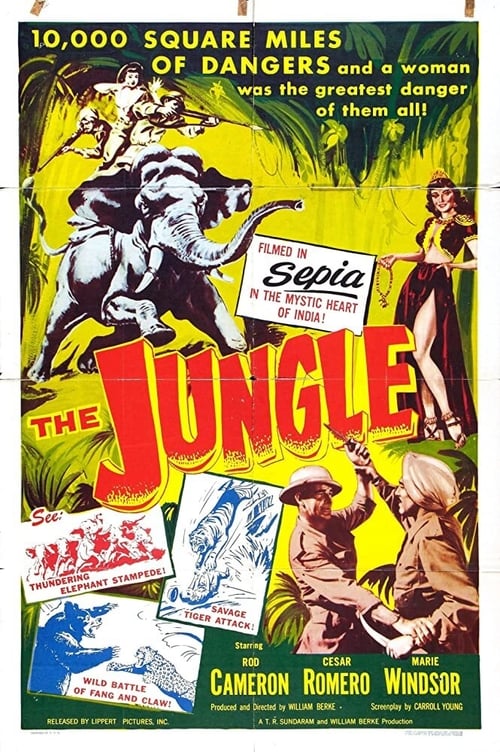
The Jungle (1952) is a typical genre piece that fits within the established norms of its time. While it includes a diverse cast, it does not actively challenge social expectations or promote inclusive identities. The film relies on traditional hierarchies and colonialist clichés. The presence of a diverse cast is overshadowed by a narrative structure that upholds Western perspectives of exploration and heroism. Ultimately, the film serves as a product of its era, prioritizing genre-driven adventure over challenging social norms.
Category Breakdown
The film follows the typical straight-centered norms of 1950s adventure movies. There are no characters with non-traditional gender identities or stories that question these norms.
Marie Windsor is portrayed as an Indian princess with a position of status. However, her role seems less important compared to the physical adventures of the male protagonist, Rod Cameron.
Cesar Romero adds a layer of inclusion as a well-known actor of Latin American heritage. However, the story still leans on colonial-era stereotypes like the 'white hunter.'
The story adheres to conventional mid-century adventure clichés that emphasize Western perspectives. It does not challenge Western institutions or the idea of the 'exotic' wilderness.
There are no characters with visible or invisible disabilities in the film. The plot also does not show any representation of neurodivergent individuals.
Present on Screen
Limited or Absent
Official Synopsis
An Indian princess (Marie Windsor), her adviser (Cesar Romero) and a white hunter (Rod Cameron) fight woolly mammoths. Filmed in sepia.
1947
1954
1949
1932
1955
1950
1948
1934
No reviews yet. Be the first to share your thoughts on this movie!
Use the rating form above to leave a star rating and optional review.