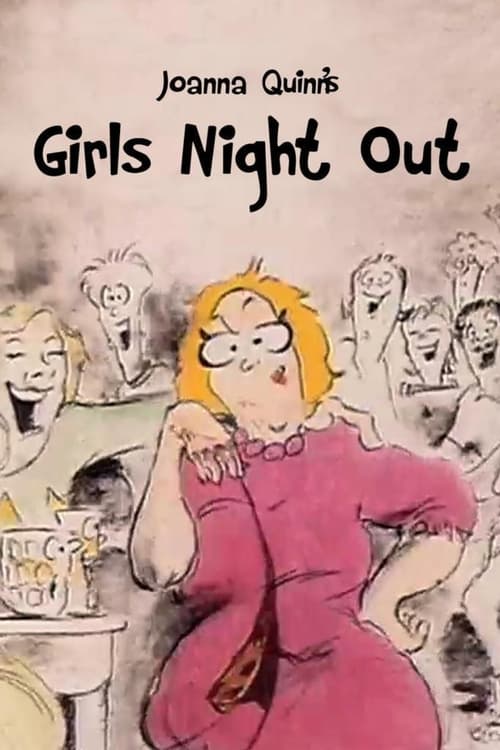
Girls Night Out
1988
No user ratings available yet
Diversity score: 5.8 out of 10

2012
Director
Michaela Pavlátová
Runtime
7 minutes
Average Rating
No ratings yetSynopsis
As every morning, men get on the tram to go to work. But on that day, to the rhythm of the tickets inserted in the ticket-stamping machine, the vehicle gets erotic and the conductress’ desire turns the reality into a surrealistic and phallic fantasy.
Overall Score
Fair
Category Breakdown
LGBTQ+ Representation
The film explores sexual liberation by subverting heteronormative routines. It replaces the standard social contract of a commute with a fluid, eroticized reality driven by individual desire.
Gender Representation
The narrative centers female agency by placing the conductress in a position of psychological dominance. Male passengers become rhythmic, mechanical components within her surrealist, female-driven landscape.
Racial & Ethnic Diversity
The setting appears to be a localized, urban European environment. Character designs prioritize stylistic abstraction over explicit racial identifiers, offering little evidence of intersectional casting.
Religious & Cultural Diversity
The work critiques the rigidity of modern urban structures by transforming a symbol of capitalist efficiency into a site of irrational fantasy. It prioritizes subjective experience over institutional order.
Disability Representation
The film does not feature characters defined by physical or neurodivergent disabilities. Characters function as archetypal fragments within a dreamscape rather than specific social identities.
Strengths
Areas for Improvement
AI Analysis
Michaela Pavlátová’s *Tram* succeeds as a sophisticated subversion of gendered power dynamics. By centering the conductress's internal psychological state, the film shifts the female role from a passive observer to an active architect of reality. While the film excels in exploring female agency and subjective desire, it lacks demographic breadth. The focus on stylized abstraction and a localized European setting results in minimal racial or ethnic diversity. Ultimately, the film is a powerful exploration of the female gaze. It uses animation to disrupt conventional expectations of public, gendered spaces, even if it avoids broader sociopolitical themes.
No reviews yet. Be the first to share your thoughts on this movie!
Use the rating form above to leave a star rating and optional review.