The Singer from Mexico
1957
No user ratings available yet
Representation score: 2.7 out of 10
Representation Score
Limited
1963
Director
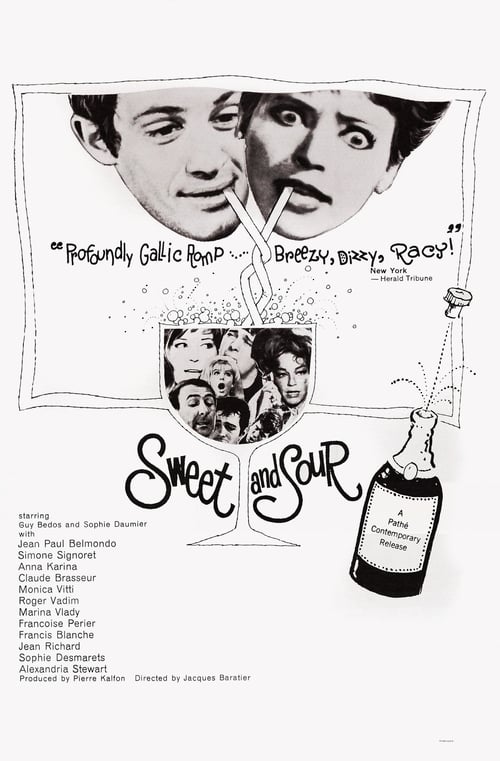
Jacques Baratier
Runtime
93 minutes
Average Rating
No ratings yetNew Showbiz Analysis
Sweet and Sour is a conventional period comedy reflecting the typical demographic and cultural makeup of 1960s French cinema. It follows a traditional narrative structure without making intentional efforts to disrupt social hierarchies. The story centers on a young man’s pursuit of acting and his sister’s intellectual passions. This focus keeps the narrative within the bounds of mid-century social norms rather than exploring diverse identities. Overall, the film lacks the narrative complexity needed to challenge the status quo, serving instead as a reflection of its era's social homogeneity.
Category Breakdown
The film does not include any explicit LGBTQ+ characters or storylines. The plot revolves around a young man's journey towards becoming an actor.
Frédérique plays a significant role through her interest in cinéma vérité, but the story is primarily driven by the male protagonist. The sibling relationship follows traditional patterns.
The narrative reflects the homogeneous social structures of 1960s France. There is no indication of a diverse cast that disrupts standard demographic norms.
The film adheres to conventional Western social structures and values from the mid-20th century. It does not challenge established institutions or prioritize secular critiques.
There are no visible or invisible disabilities that play a central role in the character arcs or the plot progression.
Present on Screen
Limited or Absent
Official Synopsis
Gerard, a young man from a "good family" dreams of becoming an actor. To do this, he follows everywhere his sister Frédérique who is infatuated with cinéma vérité.
1957

2004
1969
1967
1969

1977

1937

1939
No reviews yet. Be the first to share your thoughts on this movie!
Use the rating form above to leave a star rating and optional review.