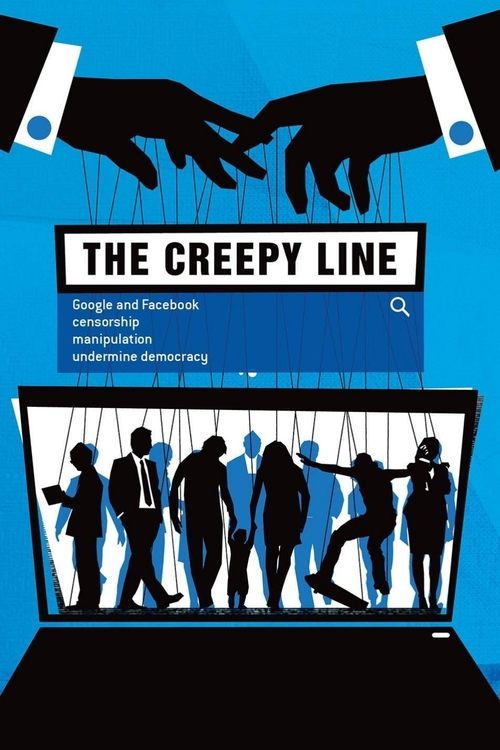
The Creepy Line
2018
No user ratings available yet
Representation score: 8.1 out of 10

Representation Score
Good
2017
Director
Peter Greste
Runtime
41 minutes
Average Rating
No ratings yetNew Showbiz Analysis
Peter Greste’s documentary serves as a systemic critique of the digital attention economy. It prioritizes the deconstruction of institutional power and algorithmic structures over individual identity politics or demographic representation. The film's strength lies in its global perspective, examining how digital tools impact diverse geopolitical landscapes and non-Western political structures. This prevents the narrative from becoming a purely Western-centric study. However, the focus on macro-level mechanics results in lower scores for specific identity categories. The film lacks centered narratives for LGBTQ+ individuals, gendered roles, or people with disabilities, focusing instead on the erosion of objective truth.
Category Breakdown
The film focuses on technological and political systems rather than queer narratives or non-straight identities. While there are no derogatory portrayals, the narrative does not challenge the assumption that everyone is straight or cisgender.
The documentary examines algorithmic bias and corporate governance through a systemic lens. It touches on how digital spaces reinforce hierarchies but lacks a specific focus on gendered roles or the subversion of traditional masculine leadership.
The film achieves meaningful representation through its global scope. It avoids a Western-centric focus by showing how social media affects various ethnic populations and can be used against underrepresented groups.
The documentary excels by critiquing traditional Western institutions and the pursuit of profit. It explores the post-truth era, deconstructing the concept of a singular, objective reality in favor of a fragmented landscape.
The film does not explicitly address neurodivergence or physical disability as central themes. While the psychological impact of social media is a subtext, it lacks specific, agentic portrayals of individuals with disabilities.
Present on Screen
Limited or Absent
Official Synopsis
"What's on your mind?" It's the friendly Facebook question which lets you share how you're feeling. It's also the question that unlocks the details of your life and helps turn your thoughts into profits.
2018

2013

2016

2016
2018
2013
2014
2013
No reviews yet. Be the first to share your thoughts on this movie!
Use the rating form above to leave a star rating and optional review.