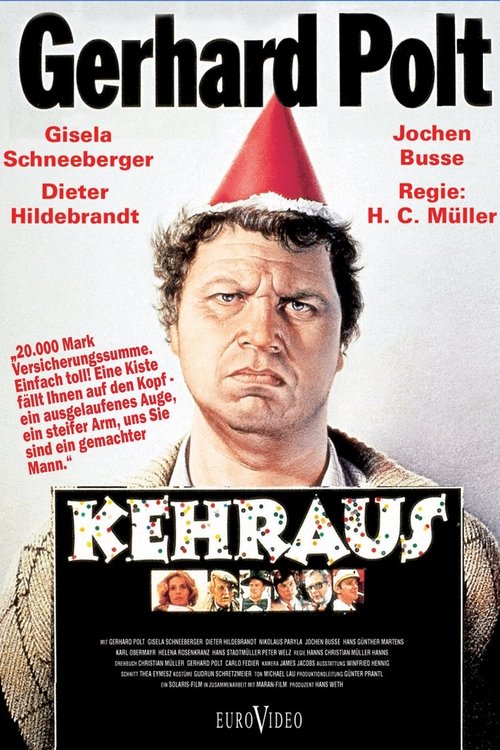
Kehraus
1983
No user ratings available yet
Representation score: 2.8 out of 10

Representation Score
Limited
1993
Director
Vito Zagarrio
Runtime
90 minutes
Average Rating
No ratings yetNew Showbiz Analysis
Bonus Malus is a traditional character-driven comedy-drama that focuses on the personal disintegration of a rootless insurance agent. The film prioritizes individual social instability over broader systemic representation. It adheres to the demographic frameworks typical of early 1990s European cinema, lacking the complexity needed to deconstruct hierarchies or promote multi-layered identities. Instead, it highlights the friction between individuals and bureaucratic institutions. Ultimately, the film serves as a social commentary on professional alienation rather than a vehicle for diverse representation.
Category Breakdown
The film does not include any explicit LGBTQ+ characters or narratives. It centers on a single male protagonist in a traditional character study.
The narrative revolves around a male insurance agent, reflecting traditional gender roles. Female characters are present but do not challenge gender hierarchies.
The film reflects the homogeneous demographics typical of 1993 Italian cinema. There is no indication of diverse ethnic casting or characters who reflect more than one aspect of diversity.
The film critiques the stability of capitalism and the fragility of professional identity. It explores the theme of social alienation through the protagonist's sense of rootlessness.
There is no documented evidence of physical or neurodivergent disabilities being portrayed in the film's main storyline.
Present on Screen
Limited or Absent
Official Synopsis
The life of a rootless insurance agent starts falling apart.
1983

2001

2008
1997
1990
1995
2003

1996
No reviews yet. Be the first to share your thoughts on this movie!
Use the rating form above to leave a star rating and optional review.