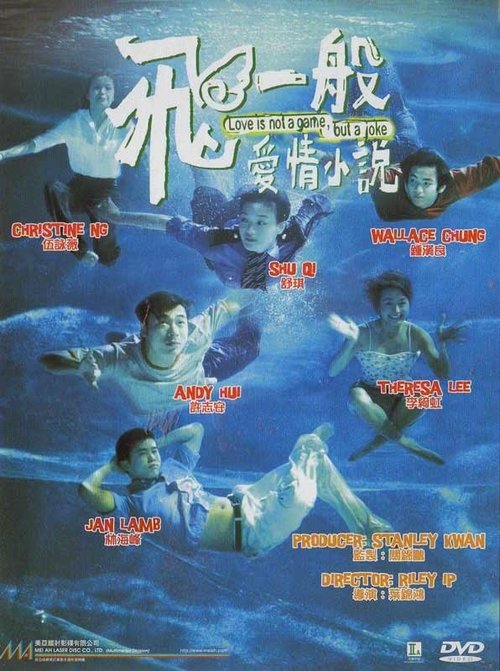
Love Is Not a Game, But a Joke
1997
No user ratings available yet
Representation score: 3.2 out of 10
Representation Score
Minimal
1987
Director
Wong Jing
Runtime
102 minutes
Average Rating
No ratings yetNew Showbiz Analysis
Wong Jing’s comedy emphasizes stylistic absurdity and 'Mo Lei Tau' nonsense over social representation. The film is a product of its era, prioritizing commercial entertainment and localized Hong Kong culture. The narrative structure relies on traditional gender hierarchies and a homogeneous cultural perspective. While the humor deconstructs serious narratives through irony, it does not challenge systemic power dynamics or identity-based social structures. Ultimately, the film serves as comedic escapism rather than a platform for diverse or progressive social perspectives.
Category Breakdown
The film centers on heterosexual relationships and romantic competition, without any representation of LGBTQ+ identities or non-cisgender narratives.
The story is dominated by male camaraderie, with female characters mainly serving as objects in a romantic game rather than independent plot drivers.
The cast and setting are predominantly Cantonese, reflecting the 1980s Hong Kong context. There is no significant racial diversity or intersectionality.
The film focuses on social leisure and romantic success, lacking religious themes or critiques of Western institutions. It remains a localized, secular comedy.
There is no focus on physical, neurodivergent, or sensory disabilities. Characters are portrayed through standard comedic archetypes without addressing disability.
Present on Screen
Limited or Absent
Official Synopsis
Ah Fat, foul-mouthed, along with his two close buddies, Traffic Light and Ugly, are working in a garage. Their boss, Ken, is harsh and stingy. However, a warm and close friendship has been established amongh the four. In order for Ah Fat to get over his heartbreak at getting dumped by his girlfriend, Ken suggests a tour to Penang to cheer him up. They come across two beautiful girls, Tung Tung and Man Chi, strolling leisurely on the beach as if they were very wealthy. Since then they decide who's whose. And Ah Fat, the winner, chooses Tung Tung to be his sole target. By the rules of the game, Ken, Traffic Light and Ugly have to compete to see who in the end will win the heart of Man Chi.
1997
1988
1984

1985
1996

2007
1997
1984
No reviews yet. Be the first to share your thoughts on this movie!
Use the rating form above to leave a star rating and optional review.