
All in Time
2016
No user ratings available yet
Representation score: 3.3 out of 10
Representation Score
Fair
1981
Director
Jacques Monnet
Runtime
100 minutes
Average Rating
No ratings yetNew Showbiz Analysis
Jacques Monnet’s film provides a nuanced exploration of interpersonal relationships that challenge the traditional gender and sexual norms of 1981. By highlighting non-traditional domestic arrangements and female leadership, the film pushes beyond conventional hero narratives to examine social fluidity. However, the narrative remains confined to a largely homogeneous Western European setting. While it effectively challenges traditional gender hierarchies and incorporates queer relationships, it falls short in providing significant racial diversity.
Category Breakdown
The film includes same-sex relationships as part of the characters' everyday lives, such as Mickey's longtime partner and Louise's potential romantic interest. These relationships are shown as stable parts of their lives rather than sources of conflict or trauma.
Louise challenges the nurturing stereotype by being a tough, authoritative mentor. Clara also plays a strong role, making independent decisions that affect the male characters, rather than being a passive figure.
The cast lacks significant racial or non-Anglo-Saxon diversity, focusing primarily on a European context. Bertrand's German wife is the only notable non-white character.
The story focuses on personal freedom and fluid social interactions, questioning traditional family structures. It delves into complex relationships that challenge the stability of Western institutions and the nuclear family.
There are no visible or mentioned depictions of physical or neurodivergent disabilities in the film.
Present on Screen
Limited or Absent
Official Synopsis
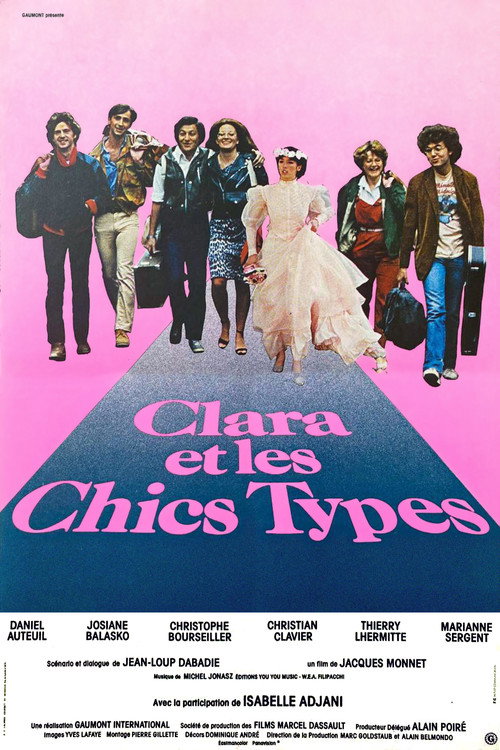
In 1981, in Grenoble, Mickey, Bertrand, Frédéric, Charles, Louise, and Aimée—brought together by a shared desire to make music—are the members of a band called the “Why Notes.” During a wedding ceremony in a church where Charles is playing the harmonium for the occasion, Bertrand, who has come to join him, notices the groom interrupting the ceremony and running away. A few hours later, just as the band is about to leave for a concert in Paris at the high school they attended, Bertrand runs into Clara, who suggests they run away together and then disappears... Bertrand, completely captivated by Clara, leaves the band and sets off in search of her... in Paris.
2016
1971

1989
1974
1984
1967

1986
1991
No reviews yet. Be the first to share your thoughts on this movie!
Use the rating form above to leave a star rating and optional review.