
The Strings
2020
No user ratings available yet
Representation score: 5.7 out of 10
Representation Score
Fair
2026
Director
David Moreau, Renee Zhan, RZA, Ernest R. Dickerson, Flying Lotus, Tobias Forge
Runtime
98 minutes
Average Rating
No ratings yetNew Showbiz Analysis
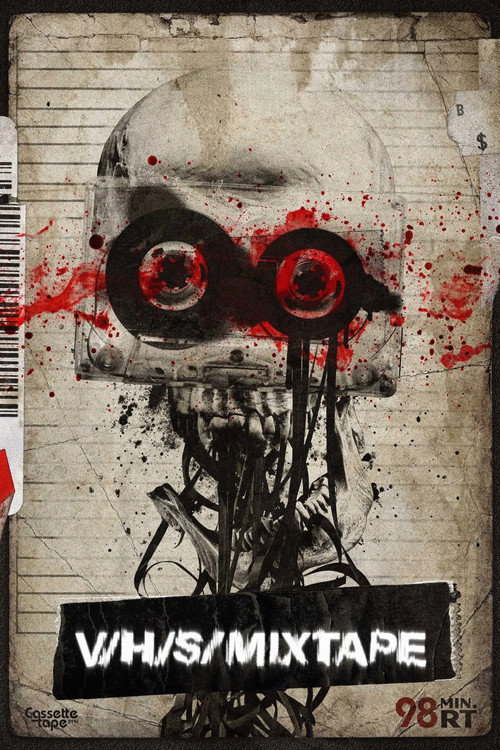
V/H/S/Mixtape opens with the clatter of analog horror, a genre that thrives on the decay of physical media. The film’s argument is simple: corporate ownership strips art of its soul. In the segment involving the puppets, George, the puppeteer, resists the studio’s demand to scan his creations for a digital reboot. The studio, represented by Sam and Daisy, treats the puppets as assets, not art. This conflict is the film’s moral center, a critique of how media conglomerates flatten cultural heritage into consumable data. The horror here is not supernatural but systemic; the "curse" is the loss of creative control. The film’s internal logic, however, is thin. While it critiques corporate exploitation, it does so through a familiar lens that offers no alternative. George’s resistance is noble but ultimately powerless against the studio’s machinery. The film does not explore the broader implications of this dynamic, nor does it offer a vision of what art might look like outside the corporate structure. The ending, if it follows the genre’s conventions, likely reinforces the idea that individual resistance is futile against institutional power. This is a conservative critique, one that laments the loss of authenticity without challenging the structures that caused it. The sold meaning is clear: the film likes the artist, mocks the corporation, and treats the audience as complicit in the consumption of flattened culture. But it does not push further. It does not ask who owns the audience’s attention, or how the horror itself is commodified. The film’s argument is a lament, not a revolution. It is a film that understands the problem but lacks the courage to name its solution. The last image, likely a return to the analog horror aesthetic, reinforces the idea that the past is safer, more authentic, and more human than the digital present. This is a nostalgic verdict, one that values heritage over progress, but it is a safe one, one that does not challenge the viewer to think beyond the binary of artist and corporation.
Category Breakdown
No queer characters, intimacy, or non-binary identities appear in the verified materials. The anthology format provides no visible space for identity exploration. Queer representation is entirely missing from the credited roles and dialogue.
Barbara Crampton appears as Vanessa, and Daisy interacts with the studio team. Female characters lack significant agency or narrative weight in the available text. No female-led segments or prominent women in positions of power are depicted.
Christopher Romero Sosa is credited as Sam, indicating some ethnic diversity in the cast. The majority of named cast members in the excerpt are unmarked or white. Non-white characters are not central to the narrative logic or horror mechanics.
The film critiques corporate media through the conflict between George and the studio over puppet ownership. The debate highlights tension between artistic integrity and commercial exploitation. No specific religious, national, or class-based hierarchies are explicitly challenged beyond this dynamic.
No characters with disabilities are named or described in the verified materials. Horror elements rely on physical transformation rather than disability representation. Disability is not a thematic or character-based element in the available evidence.
Present on Screen
Limited or Absent
Official Synopsis
V/H/S/MIXTAPE cranks the volume on horror with a blood-soaked collection of cursed music videos, terrifying performances, and found footage. Press play. Pray it stops.
2020
2012

2025
2013
2023
2013
2024

2004
No reviews yet. Be the first to share your thoughts on this movie!
Use the rating form above to leave a star rating and optional review.