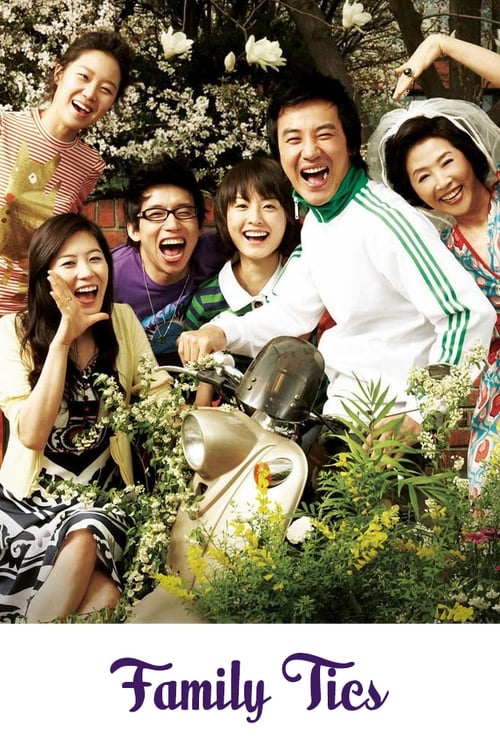
Family Ties
2006
No user ratings available yet
Diversity score: 5.5 out of 10

2019
Director
Kim Yun-seok
Runtime
96 minutes
Average Rating
No ratings yetSynopsis
Teenage girls suffer from conflicts from their parents' affairs. A baby from the affair is born, and the two families have to accept reality.
Overall Score
Good
Category Breakdown
LGBTQ+ Representation
The film focuses on the fallout of heterosexual affairs. There is no explicit evidence of queer themes or non-heteronormative identities within the narrative.
Gender Representation
The story subverts traditional hierarchies by centering the agency of teenage girls. These female protagonists serve as the primary navigators of a fractured social reality.
Racial & Ethnic Diversity
As a South Korean production, the film offers a localized, non-Western perspective. The cast is ethnically homogeneous, focusing on specific regional social ethics.
Religious & Cultural Diversity
The narrative deconstructs traditional family ideals through a lens of moral relativism. It explores the complex, situational burdens of parenthood and social bonds.
Disability Representation
The film provides no visible evidence regarding characters with physical or neurodivergent disabilities.
Strengths
Areas for Improvement
AI Analysis
Another Child functions as a social realist critique of domestic institutions. It avoids sanitized or traditionalist views of family life, opting instead to explore the messy consequences of human behavior. By shifting agency to the children affected by parental infidelity, the film deconstructs the stability of the nuclear family unit. The film's strength lies in its refusal to offer a moralistic or restorative resolution. Instead, it presents a postmodern view of morality where traditional structures are fragile and prone to collapse. This approach prioritizes the lived experience of those navigating systemic domestic dysfunction.
2006

2021

2015

2019
1999

2023

2017

2021

2014

2020

2022
2019
No reviews yet. Be the first to share your thoughts on this movie!
Use the rating form above to leave a star rating and optional review.