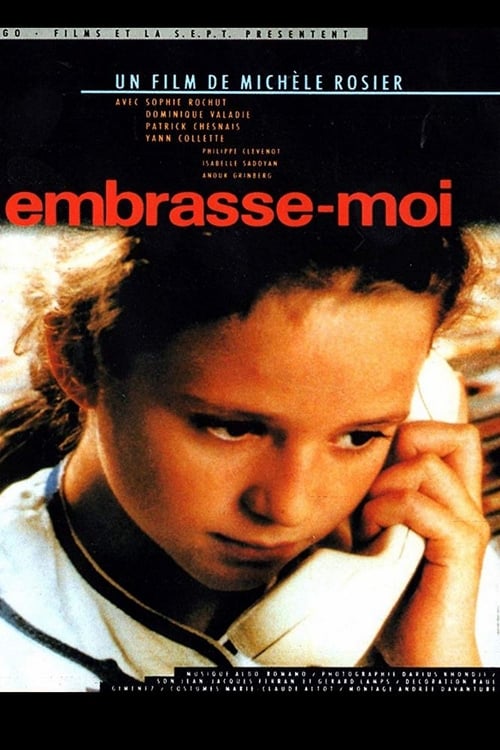
Kiss Me
1989
No user ratings available yet
Representation score: 4.4 out of 10

Representation Score
Good
1997
Director
Lucile Hadžihalilović
Runtime
52 minutes
Average Rating
No ratings yetNew Showbiz Analysis
Parental Guidance explores psychological landscapes by disrupting conventional narrative comfort. It prioritizes the subversion of domestic clichés and the deconstruction of the nuclear family over broad demographic representation. The film's strength lies in its ability to use gendered tension and mental health themes to create a sense of instability. It moves away from traditional moral clarity to focus on subjective, unsettling experiences. However, the work lacks significant representation of LGBTQ+ identities or non-straight-centered structures. The narrative remains largely homogeneous, focusing on a specific European dramatic framework that does not actively engage with diverse identities.
Category Breakdown
The film does not include explicit representations of LGBTQ+ identities or relationships that go beyond the assumption of straight relationships. The story focuses on the tension between a child, an aunt, and a male figure.
The story centers on female vulnerability and maternal absence. It challenges traditional gender roles by portraying the male protector as a potential threat rather than a pillar of domestic safety.
The setting appears to be within a localized, likely European, dramatic framework. There is no evidence of racial diversity or non-Anglo-Saxon casting within the narrative.
The film critiques the stability of traditional Western familial structures. It portrays the domestic environment as a space of ambiguity and potential predation using a skeptical, postmodern lens.
Mental health and neurodivergence are central themes due to the mother's confinement. This condition serves as a primary driver for the protagonist's displacement and the film's atmospheric tension.
Present on Screen
Limited or Absent
Official Synopsis
A ten year old girl is received by her aunt because of her mother's confinement to a mental hospital. But the aunt lives with a man, Jean-Pierre, who seems to be a little too nice with the girl.
1989

1967

2022

1950
1975

1999
2001
2002
No reviews yet. Be the first to share your thoughts on this movie!
Use the rating form above to leave a star rating and optional review.